Down Duvet Versus Wool Duvet
Some duvets feel exquisite for five minutes in a showroom and disappoint by midnight. That is why the question of down duvet versus wool duvet deserves more than a quick glance at tog ratings or fill weight. These two luxury bedding materials create very different sleep experiences, and the right choice depends on how you sleep, how warm your bedroom runs, and what kind of comfort you want night after night.
A premium duvet is not just a layer of warmth. It shapes temperature balance, drape, loft, and even the visual finish of the bed. For shoppers investing in a refined sleep environment, the difference between down and wool is as much about feel and performance as it is about material pedigree.
Down duvet versus wool duvet: the core difference
Down and wool insulate in different ways. Down clusters trap air with remarkable efficiency, creating a lightweight, lofty duvet that feels cloudlike and softly enveloping. Wool fibers, by contrast, are denser and more structured. They regulate temperature with quiet consistency and create a flatter, more tailored profile on the bed.
If you prefer your duvet to feel airy and lofty, down usually has the advantage. If you value steadier temperature control and a slightly more substantial, grounded feel, wool often stands out. Neither is universally better. The better material is the one that aligns with your body temperature, bedroom climate, and expectations of luxury.
How down feels on the bed
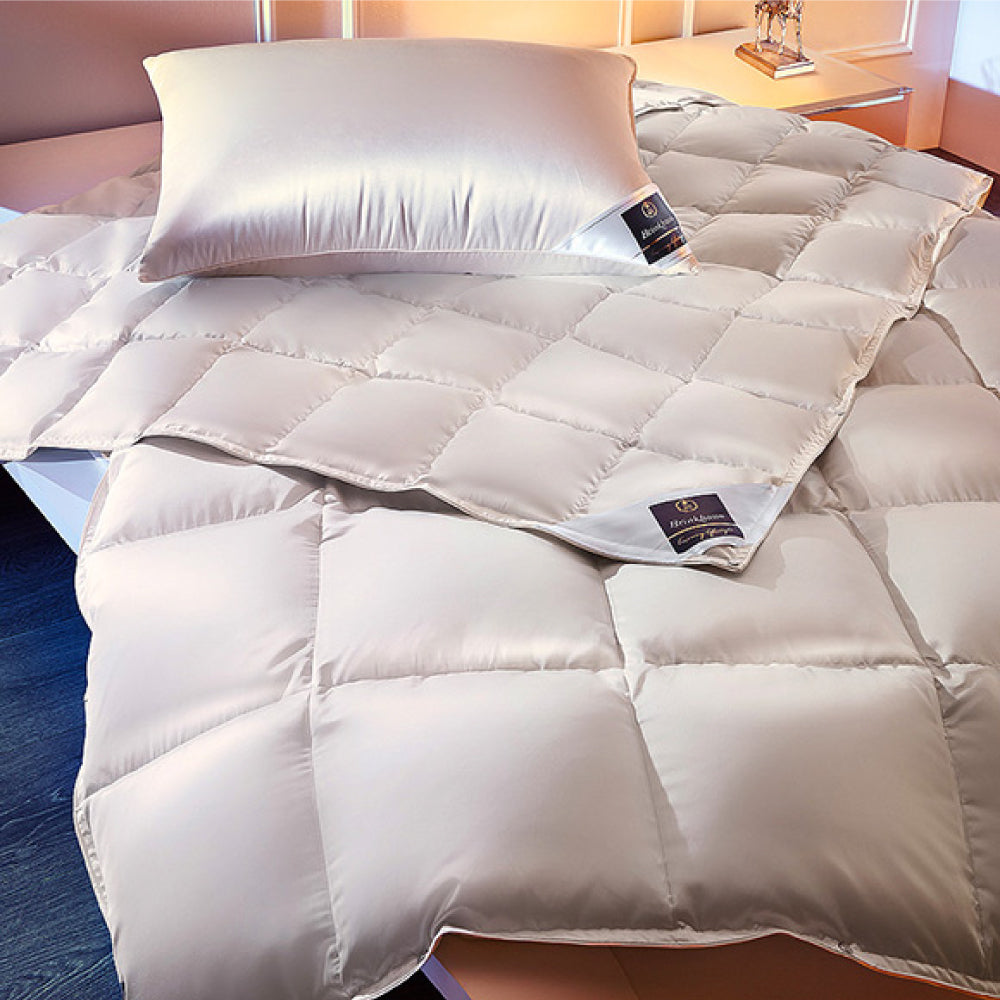
Down is prized in premium bedding for its lightness and drape. A well-made down duvet has a floating quality that many sleepers associate with indulgence. It sits gently over the body without feeling heavy, yet it can deliver impressive warmth when the fill power and construction are high quality.
That sensation matters. Some people sleep best when bedding barely feels there, even in winter. Down serves that preference beautifully. It molds softly around the body and gives the bed a fuller, more sumptuous appearance, which is one reason it remains a classic choice in luxury bedrooms and hospitality settings.
There are trade-offs. Down can be too warm for hot sleepers, especially in heated homes or milder climates. It also tends to perform best when properly fluffed and cared for, so it keeps its loft over time. Buyers who want visual plushness and a cocooning feel often love it. Buyers who dislike any heat buildup may not.
Warmth and insulation with down
Down excels at retaining heat relative to its weight. This is why a premium down duvet can feel almost weightless while still being deeply warm. For colder bedrooms, winter use, or sleepers who naturally run cool, that can be a genuine luxury.
The challenge is precision. If your bedroom temperature varies or you tend to wake warm in the early hours, down may feel less forgiving than wool. It insulates brilliantly, but it is not always the easiest option for people whose temperature shifts through the night.
How wool feels on the bed
Wool offers a different kind of refinement. Instead of a lofty, cloudlike profile, it gives a smoother, more understated finish. The feel is often described as balanced rather than airy. It does not billow in the same way as down, but many sleepers appreciate its calm, composed comfort.
One of wool's most attractive qualities is its natural breathability. Wool can absorb and release moisture while helping maintain a more stable sleeping climate. That makes it especially appealing for people who overheat, experience night sweats, or want bedding that feels comfortable across more of the year.
The tactile experience is also worth noting. A wool duvet usually feels a touch denser and slightly heavier than down, though premium construction can still keep it elegant and comfortable. For some sleepers, that subtle weight feels reassuring. For others, it may feel less luxurious simply because it is not as lofty.
Temperature regulation with wool
Wool is often chosen for regulation rather than dramatic warmth. It adapts well, which is why many shoppers view it as a strong year-round option. In a climate-controlled bedroom, that versatility can be more useful than maximum insulation.
This is where wool often wins loyal converts. It helps reduce the peaks and valleys of sleeping temperature. Instead of feeling very warm at first and then too warm later, it tends to remain more even. For couples with mixed temperature preferences, that moderation can be especially valuable.
Down duvet versus wool duvet for hot sleepers
If you sleep warm, wool usually deserves serious attention. Its ability to manage moisture and maintain breathability makes it more comfortable for many hot sleepers than down. It creates warmth without the same level of heat trapping, and that can make the difference between sleeping soundly and throwing the duvet aside at 3 a.m.
That said, not all down duvets are excessively warm. A lighter-weight down duvet in a breathable cotton shell can still suit some warm sleepers, especially if the room stays cool. But if overheating is a recurring issue, wool is generally the safer investment.
Which is better for cold sleepers?
For cold sleepers, down is often the more satisfying choice. It delivers exceptional insulation with very little weight, and that combination is difficult to replicate. If you love the sensation of being warmly wrapped without feeling pressed down by the bedding, down is hard to beat.
Wool can still work for cool sleepers, particularly in warmer homes or transitional seasons. But for those who genuinely struggle to stay warm at night, down usually provides a more immediate sense of cozy luxury.
Allergies, sensitivities, and bedroom environment
This part is more nuanced than many product descriptions suggest. Some buyers assume wool is automatically better for allergies, while others believe down should be avoided altogether. In reality, the quality of the fill, the cleanliness of the material, and the weave of the duvet casing all play a major role.
A well-crafted down duvet with a tightly woven cotton shell can perform beautifully in a refined sleep setting. High-quality wool also appeals to buyers who prefer natural fibers and moisture control. If sensitivities are a concern, it is worth looking beyond the material name alone and considering overall construction and finish.
Care and longevity
Luxury bedding should feel beautiful, but it also needs to suit the way you live. Down duvets generally require more careful laundering and drying to preserve loft. They benefit from regular airing and gentle maintenance. When well cared for, they can offer years of exceptional comfort.
Wool duvets are often appreciated for being lower maintenance in day-to-day use, particularly because wool naturally resists odors and manages moisture well. However, they also require thoughtful care and should not be treated casually. The point is not that one is easy and the other difficult. It is that down asks you to protect loft, while wool asks you to protect fiber integrity.
Aesthetic appeal and bed styling
For an interior-conscious buyer, appearance matters. Down duvets create a fuller, more luxurious silhouette. They give the bed that plush, inviting profile many people associate with a five-star suite. If your bedroom design leans soft, layered, and indulgent, down complements that look beautifully.
Wool duvets are more restrained. Their appeal is quieter, more tailored, and often more contemporary. In a bedroom where clean lines and understated elegance matter, wool can feel every bit as premium - just in a less overtly voluminous way.
So, which duvet is right for you?
If you want loft, softness, and strong warmth with minimal weight, down is usually the more compelling choice. It suits sleepers who run cool, love a plush bed, and want that unmistakably cocooning feel associated with classic luxury bedding.
If you want breathable comfort, steadier temperature regulation, and a more tailored drape, wool is often the smarter option. It suits hot sleepers, year-round use, and buyers who value quiet performance as much as surface softness.
At the premium end of the market, the decision is rarely about good versus bad. It is about matching material character to personal sleep behavior. A beautifully crafted duvet should support how you rest, not simply look impressive folded at the foot of the bed.
For many discerning shoppers, the best choice becomes clear the moment they think less about what sounds luxurious and more about what will still feel exceptional at two in the morning.