Premium Mattress Materials Guide
A mattress can look impeccable in a beautifully designed bedroom and still feel wrong after a week. That disconnect usually comes down to materials. This premium mattress materials guide is designed for shoppers who want more than a quick firmness label - they want to understand what sits beneath the cover, how it performs over time, and which materials justify a higher investment.
In the luxury market, materials are not a minor detail. They shape pressure relief, temperature regulation, motion control, edge support, and the overall character of sleep. They also influence how a mattress ages. Two beds may appear similarly plush on a showroom floor, yet one may retain its poise for years while the other softens prematurely. For discerning buyers, material composition is where quality becomes visible.
Why a premium mattress materials guide matters
Premium mattresses are often defined by refinement rather than excess. That means better fibers, more considered layering, stronger support systems, and craftsmanship that balances comfort with structure. Price alone does not guarantee this. What matters is how the mattress is built and whether the materials work together with intention.
A luxurious sleep surface should feel composed, not overstuffed. It should cushion pressure points without allowing the body to sink too far out of alignment. It should also suit the sleeper's environment and preferences. A cooler sleeper may appreciate the insulating comfort of natural fibers, while someone who runs warm may prefer more breathable components and a support core that encourages airflow.
The premium mattress materials guide to comfort layers
The upper layers create first impressions, but in a well-made mattress they do more than feel inviting. They are responsible for contouring, pressure distribution, and much of the mattress's climate behavior.
Natural latex
Latex is one of the most respected materials in premium sleep design because it manages to feel buoyant, supportive, and durable at once. Rather than the deep, slow sink associated with some synthetic foams, latex offers a more responsive cradle. It compresses under pressure, then recovers quickly, which many sleepers describe as easier to move on.
In a luxury mattress, latex is often chosen for its longevity and breathability. It tends to resist body impressions better than many conventional foams, and its open structure can help dissipate heat. The trade-off is feel. If you prefer an enveloping, highly cushioned sensation, latex may seem more uplifted than plush, even in softer constructions.
Wool, cashmere, silk, and other natural fibers
Natural fibers are often what give a premium mattress its composed, tailored finish. Wool is particularly valued for temperature regulation and moisture management. It can help create a drier, more balanced sleep climate through changing seasons, which is one reason it appears so often in premium European-style mattresses.
Cashmere and silk are usually used in smaller amounts, but they contribute softness and a more elevated hand feel. These fibers are rarely about bulk. They are about refinement. Their presence often signals a mattress designed with comfort layering that extends beyond simple foam thickness.
That said, fiber-rich comfort layers can feel different from deep foam padding. They tend to offer a more subtle, breathable luxury rather than a pillowy sink. For many buyers, that distinction is exactly the appeal.
High-grade foams
Foam still has an important place in premium mattress construction when it is selected well and used with restraint. Higher-density foams can deliver excellent pressure relief and a more tailored comfort profile, especially in mattresses designed for side sleepers or those with joint sensitivity.
The key issue is quality. In lower-end builds, foam can be the weak point that loses resilience too quickly. In premium designs, better foam formulations and more thoughtful layering improve durability and reduce that tired, flattened feeling. Even so, foam-heavy mattresses vary widely. Some feel luxuriously cushioning, while others can sleep warmer or feel less lively than latex or fiber-forward alternatives.
Support materials define how the mattress performs
Comfort layers attract attention, but support materials determine whether comfort remains elegant over time. This is where posture, stability, and long-term shape retention are won or lost.
Pocket coils
Pocket coil systems remain a hallmark of many premium mattresses for good reason. Individually wrapped coils respond more precisely to the body than older interconnected systems, allowing better contouring and reduced motion transfer. They also create airflow through the core, which can help the mattress feel fresher and cooler.
In well-crafted luxury mattresses, the coil count matters less than coil quality, zoning, and the way the upper layers interact with the springs. A thoughtful pocket coil unit can support the shoulders, waist, and hips differently, creating a more balanced feel for the spine. For couples, this often translates to a mattress that feels both stable and accommodating.
Microcoils
Microcoils are smaller spring layers often placed closer to the surface. They bring responsiveness, subtle pressure relief, and ventilation without the denser feel of thick foam. In premium construction, microcoils can add a sophisticated sense of lift that keeps plush layers from feeling stagnant.
They are especially appealing for shoppers who want softness with structure. Instead of melting into the bed, you feel gently cushioned while remaining supported on top of it. That sensation can be particularly welcome in master bedrooms where comfort is expected, but composure is equally important.
High-performance support foams
Some premium mattresses use advanced foam cores instead of springs, particularly when a quieter, more uniform support feel is desired. A high-quality foam core can provide excellent pressure distribution and partner-friendly motion isolation.
The trade-off is that the mattress may feel less airy and less dynamic than a coil design. For some sleepers that is ideal. For others, especially those who prefer a more buoyant or breathable sleep surface, spring-based support may feel more luxurious in practice.
Materials that shape temperature and touch
Luxury shoppers often focus on comfort and aesthetics at the same time, and rightly so. The outer materials affect both.
Mattress covers and ticking
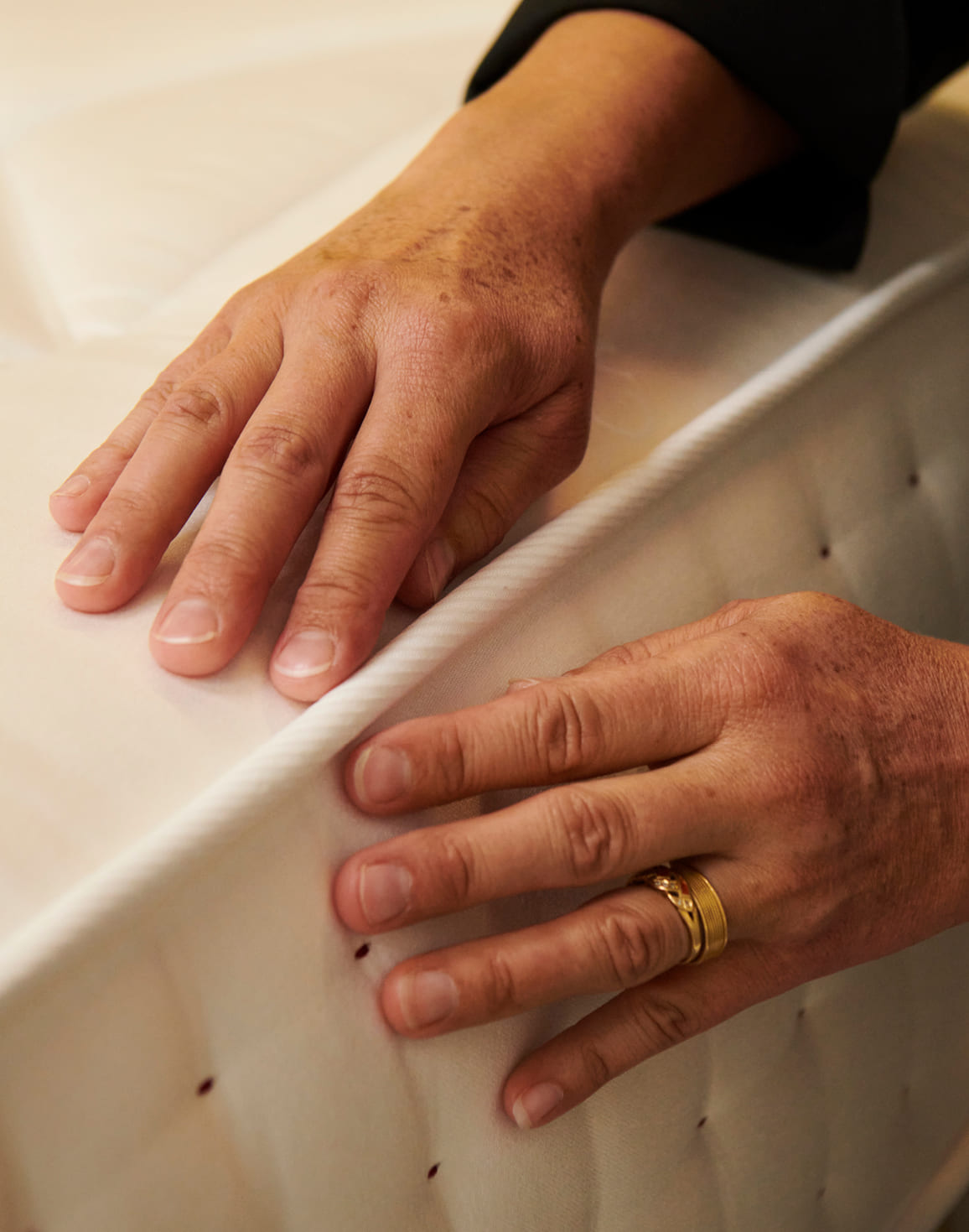
A premium cover is not simply decorative. Fine cotton, knit performance textiles, and damask-style weaves all influence breathability, softness, and the way the comfort layers respond beneath you. A beautifully tailored cover can also improve the mattress's overall finish, giving it a more architectural, polished appearance in the room.
Quilted covers tend to create a more cushioned first touch, while smoother stretch-knit covers allow you to feel the underlying comfort layers more directly. Neither is automatically better. It depends on whether you want a mattress that feels traditionally sumptuous or more technically precise.
Horsehair and other specialty materials
In the upper tier of luxury mattress making, specialty materials such as horsehair may appear. These materials are prized for resilience, ventilation, and craftsmanship heritage. They are less about trend and more about traditional mattress making at its most exacting.
These constructions are not for every buyer, but they appeal to those who value artisanal detail and an unmistakably elevated sleep experience. In the right mattress, they contribute to a dry, springy, exceptionally refined feel that mass-market materials rarely replicate.
How to read a premium mattress materials guide when shopping
The most useful way to compare premium mattresses is to think in layers rather than labels. Start with the support core. Is it pocket coil, microcoil-enhanced, latex, or high-density foam? Then look at the comfort layers. Are they primarily natural fibers, latex, foam, or a hybrid of several materials? Finally, consider the cover and finishing details, because these influence both hand feel and breathability.
It is also wise to match materials to your priorities. If you want breathable, resilient comfort with a more natural composition, latex, wool, and coil systems are often compelling. If pressure relief and motion isolation are at the top of your list, premium foams may be more suitable. If aesthetics and craftsmanship matter as much as technical performance, look closely at quilting, textile quality, and tailoring.
There is also the question of sleep style. Side sleepers often need more pressure relief at the shoulders and hips, while back and stomach sleepers generally benefit from a more controlled surface with stronger underlying support. Couples may prioritize motion control and edge stability. Warm sleepers should pay attention to airflow and moisture-managing fibers rather than assuming every plush mattress will sleep the same.
For buyers furnishing a complete bedroom, this is where a curated retailer such as Sleeping Plaza becomes especially valuable. The advantage is not just access to premium brands. It is the ability to compare design philosophies, materials, and comfort profiles within a luxury context, with a clearer sense of how each mattress contributes to the overall sleep environment.
The finest mattress materials do not all feel alike, and that is precisely the point. Luxury is not a single sensation. It is the confidence of choosing construction that aligns with your body, your bedroom, and the way you want to rest night after night. When the materials are right, comfort stops being a showroom impression and becomes part of daily life.