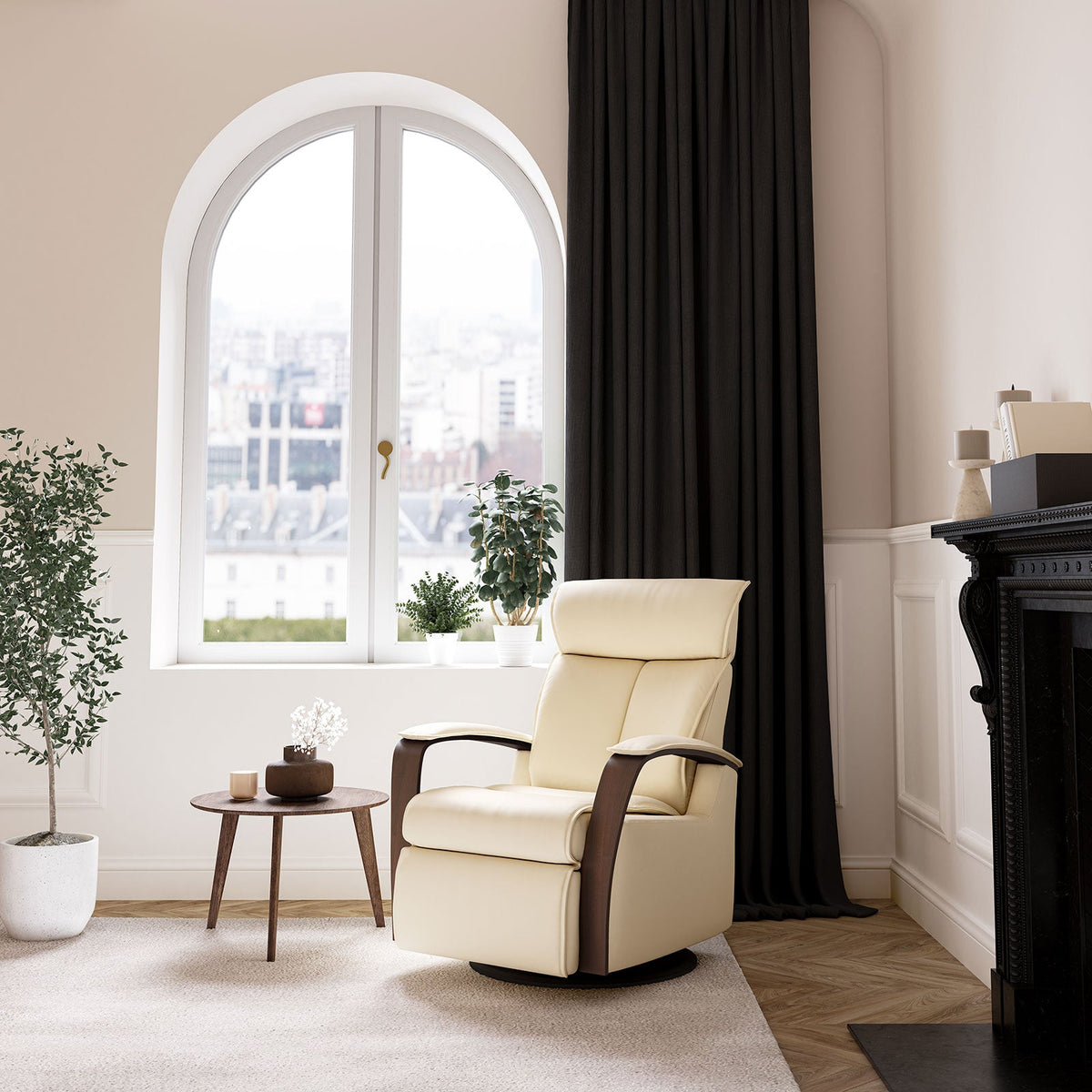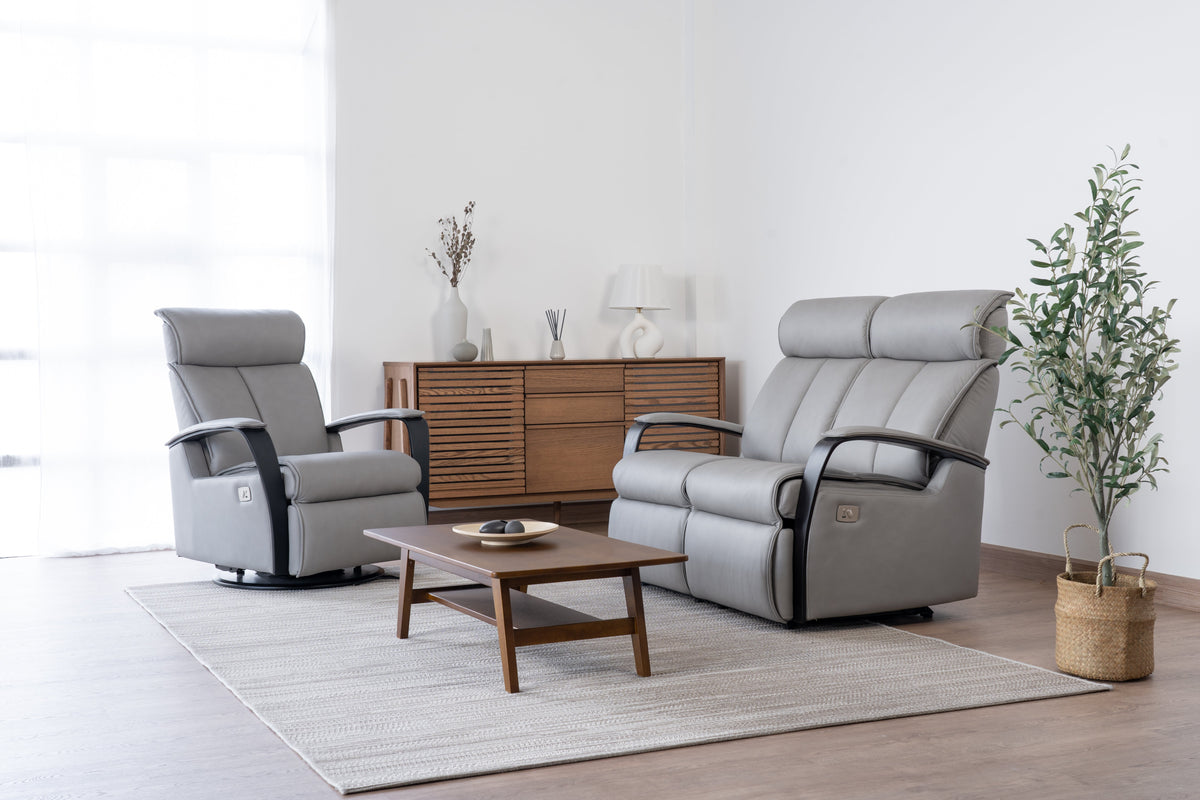
Electric Versus Manual Recliners Compared
A recliner earns its place differently from an occasional chair. It may become the preferred seat for a quiet morning, a restorative pause after travel, or an evening spent reading in a beautifully considered living room. When comparing electric versus manual recliners, the question is not simply whether you want a button or a lever. It is about the quality of the reclining experience, the room’s visual calm, and how naturally the chair supports the way you live.
For a luxury home, both mechanisms can be exceptional. The better choice depends on your comfort priorities, your physical needs, the intended setting, and the level of adjustability you expect from a piece of furniture designed for daily use.
Electric Versus Manual Recliners: The Essential Difference
A manual recliner is operated through a side handle, lever, or discreet push-back mechanism. Its appeal lies in its directness: you activate the chair yourself, and the mechanism moves to one or more preset reclining positions. With thoughtful engineering and high-quality upholstery, a manual recliner can feel remarkably elegant and enduring.
An electric recliner uses a powered motor, usually controlled by buttons placed along the arm or through a handset. Rather than moving between a limited number of positions, many electric models allow gradual adjustment. You can raise the footrest independently, recline the back to a precise angle, or stop anywhere between upright and fully relaxed.
That distinction matters more than it first appears. A manual design favors simplicity and an uncluttered ownership experience. An electric design favors personalized comfort, particularly for those who spend extended periods seated or want a carefully calibrated position for reading, watching television, or resting.
Why an Electric Recliner Feels More Personalized
The principal advantage of an electric recliner is control. Small adjustments can make a meaningful difference to comfort, especially when you are trying to relieve pressure through the lower back, elevate tired legs, or settle into a supportive position without fully reclining. Instead of committing to a single notch in the mechanism, you can find the angle that feels right for that moment.
This is particularly compelling for households with different comfort preferences. One person may want their feet elevated while remaining upright enough to read. Another may prefer a more reclined position with fuller support through the shoulders and neck. A powered chair accommodates these variations with a level of precision a conventional manual mechanism rarely matches.
Many premium electric recliners also offer independently operated back and footrest functions. This allows a near-custom seating position, rather than the fixed movement of the entire chair. In design-led collections, controls can be integrated discreetly into the arm, preserving the chair’s refined profile rather than making it feel overtly technical.
Electric operation can also be the more graceful option for anyone with reduced mobility, joint discomfort, or limited strength. There is no need to lean back with force, pull a lever, or use body weight to close the footrest. The chair responds with gentle, measured movement, which can make everyday comfort feel considerably more accessible.
There are practical considerations. A powered recliner needs access to an outlet, and its placement should account for the power cord without compromising the composition of the room. Some models offer battery backup for use during an outage, while others may include charging ports for a phone or tablet. These features are convenient, but they should be considered additions to excellent seating, not substitutes for it.
The Lasting Appeal of a Manual Recliner
Manual recliners have an understated confidence. With fewer electrical components, they are often easier to position anywhere in the room and can be particularly appealing in spaces where visible cords would interrupt a clean interior scheme. They are also ready to use at any time, without depending on a nearby outlet.
For many buyers, the tactile nature of a manual chair is part of its appeal. A well-made mechanism should open and return smoothly, without a jolt, excessive resistance, or distracting noise. The movement feels immediate and intuitive, making the chair a natural fit for a reading corner, library, bedroom sitting area, or guest suite.
Manual models can also offer a more streamlined silhouette. This is not always the case, but a simpler mechanism may allow for a lighter visual presence, narrower proportions, or a more tailored exterior. In an elegant room, those details matter. Fine leather, precise stitching, a slender arm profile, and a considered base can give a recliner the presence of an accomplished lounge chair rather than a purely functional piece.
The trade-off is limited adjustment. Some manual recliners offer several positions, while push-back versions may allow more freedom, but they generally do not provide the same independent control of backrest and footrest. If you are highly particular about ergonomics, that limitation may become apparent over long periods of use.
Comfort Depends on More Than the Mechanism
Choosing between electric and manual operation should never overshadow the chair itself. A recliner’s comfort is shaped by its seat depth, back height, lumbar contour, head support, cushioning, and the way the footrest supports the legs. The mechanism determines how you move into a position. The chair’s design determines how well you feel once you are there.
Start with proportion. A taller individual may need a higher back and longer footrest to avoid unsupported calves or a headrest that sits too low. A more compact sitter may feel more secure in a shallower seat with a lower profile. The best recliner should support the body without requiring you to perch, slide forward, or add pillows to correct its shape.
Upholstery deserves equal attention. Premium leather develops character with use and offers a polished, substantial finish that complements sophisticated interiors. Fine textiles can bring softness, depth of color, and a more relaxed residential feel. Consider the room’s light, how often the chair will be used, and whether it will sit beside other upholstered pieces. The most successful choice feels intentional within the wider furniture palette.
A recliner should also be tested in its fully extended position. Consider the support under the thighs and ankles, the reach to the controls or handle, and the ease of returning upright. A chair that feels excellent for five minutes may reveal a pressure point after half an hour. This is where expert guidance and a carefully curated collection make the selection process more reassuring.
Which Recliner Suits Your Space?
An electric recliner is often the stronger choice for a primary living room seat, media room, or dedicated relaxation corner where comfort is used and appreciated every day. It is especially well suited to buyers who value exact positioning, shared use by different household members, or effortless operation. In a larger room, its added depth and proximity to power are usually easy to accommodate.
A manual recliner can be ideal when flexibility of placement is the priority. It works beautifully in a bedroom, study, guest room, or living space where the chair must look composed from every angle and may sit away from walls or outlets. Its simpler operation also suits those who prefer furniture that feels quiet, self-contained, and uncomplicated.
Neither option is inherently more luxurious. Luxury comes from the standard of craftsmanship, the quality of the mechanism, the integrity of the frame, and the upholstery selected for your home. A poorly designed powered chair will not become exceptional because it has more functions. Equally, a finely engineered manual recliner can offer years of deeply satisfying comfort with an elegant economy of design.
A Considered Way to Choose
Before selecting a recliner, decide what you want it to do most often. If precise support, independent footrest movement, and easy operation are central to the experience, electric is likely worth the investment. If you value placement freedom, tactile simplicity, and a more minimal visual impression, manual may be the more natural fit.
At Sleeping Plaza, a recliner is best viewed as part of a complete approach to rest: a beautifully made piece that complements the bed, bedding, lighting, and rituals that make a home feel genuinely restorative. Choose the chair that invites you to use it often, supports you well when you do, and looks entirely at ease in the room you have created.