Oreiller en plumes ou microfibres pour un meilleur sommeil ?
Un lit joliment fait peut paraître complet bien avant de procurer une sensation de confort totale. La différence réside souvent sous la taie d'oreiller : le choix d'un oreiller en plumes ou d'un garnissage en microfibre façonne la hauteur sous votre tête, la température autour de votre visage et le sentiment de sérénité que vous emportez dans la nuit. Les deux peuvent apporter une finition soignée et invitante à une chambre de luxe, mais leurs profils de confort sont distinctement différents.
Le bon choix n'est pas simplement une question de matériaux naturels ou synthétiques. Votre position de sommeil, votre sensibilité à la chaleur, votre niveau de douceur préféré et votre volonté d'entretenir l'oreiller méritent tous d'être pris en considération. Un oreiller doit soutenir le cou avec une précision discrète tout en complétant l'expérience tactile d'une literie finement confectionnée.
Oreiller en plumes ou garnissage en microfibre : la différence essentielle
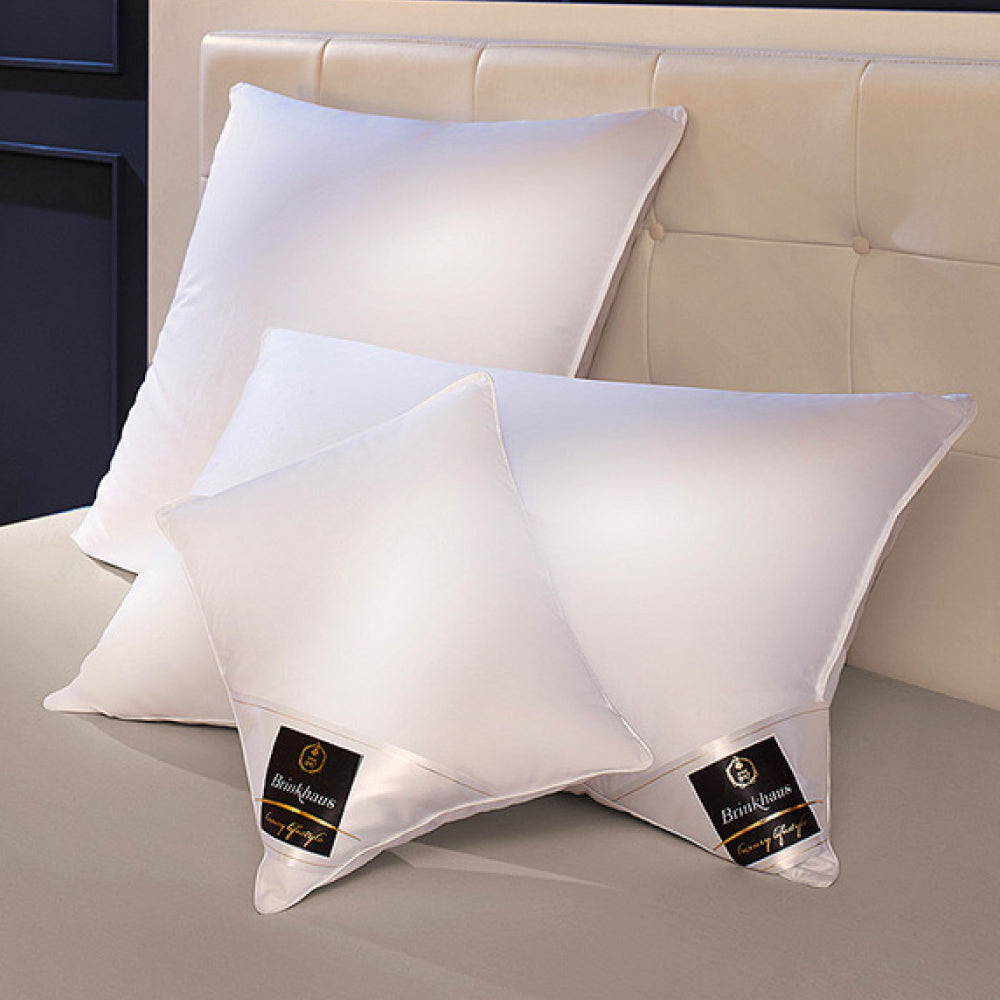
Un oreiller garni de plumes utilise les petites plumes extérieures de canards ou d'oies, parfois mélangées à du duvet pour plus de douceur. Les plumes ont des rachis structurés, ce qui donne à l'oreiller une sensation plus substantielle et malléable que le duvet seul. Dans un oreiller bien conçu, le garnissage est protégé par une enveloppe tissée serrée qui aide à empêcher les plumes de traverser le tissu.
Le garnissage en microfibre est fabriqué à partir de fibres synthétiques exceptionnellement fines, généralement du polyester. La microfibre de qualité est conçue pour créer un effet de grappe douce et aérienne qui ressemble au moelleux du duvet naturel. Elle peut être fabriquée dans différents poids et structures de fibres, du léger et nuageux au plus ferme et plus soutenant.
Aucun n'est universellement supérieur. La plume séduit les dormeurs qui apprécient un oreiller traditionnel, naturellement réactif et plus dense. La microfibre offre une alternative constamment douce et souvent plus facile à entretenir pour ceux qui souhaitent une présentation moelleuse sans garnissage naturel.
Le caractère d'un oreiller garni de plumes
Un oreiller en plumes a une sensation de substance distinctive. Son garnissage se comprime sous la tête et peut être modelé autour du cou, ce qui le rend particulièrement attrayant pour les dormeurs qui ajustent leur oreiller tout au long de la nuit. Il crée le look détendu et invitant associé à un lit d'hôtel impeccablement superposé, surtout lorsqu'il est complété par un protège-oreiller généreux et des linge de lit raffinés.
Parce que les plumes ont plus de structure que le duvet, elles offrent généralement plus de résistance et de poids. Cela peut convenir aux dormeurs sur le dos et aux dormeurs combinés qui préfèrent s'enfoncer dans un oreiller plutôt que de reposer entièrement dessus. Un volume de remplissage plus élevé peut également convenir aux épaules plus larges, à condition que l'oreiller ne relève pas trop la tête vers l'avant.
La qualité de la construction est très importante. Un oreiller en plumes de première qualité doit avoir une enveloppe en coton densément tissée, des coutures sécurisées et une composition de remplissage équilibrée. Les versions de qualité inférieure peuvent sembler inégales, s'aplatir rapidement ou laisser les rachis devenir perceptibles avec le temps. Même un oreiller en plumes exceptionnel peut nécessiter un gonflage régulier pour restaurer son gonflant et maintenir le remplissage uniformément réparti.
Il y a des compromis. Les oreillers en plumes peuvent conserver un certain degré de chaleur, et le garnissage naturel peut ne pas être le premier choix pour les personnes sensibles aux matériaux naturels. La sensation occasionnelle d'un rachis de plume fait également partie du caractère du matériau, bien qu'une enveloppe bien conçue minimise considérablement cet aspect.
Pourquoi le garnissage en microfibre a sa place dans une chambre de luxe
Le garnissage en microfibre a bien évolué par rapport aux oreillers synthétiques plats et trop élastiques dont de nombreux acheteurs se souviennent. Les fibres de denier fin peuvent créer une surface exceptionnellement lisse et douce avec un gonflant léger et invitant. Pour ceux qui recherchent l'abondance visuelle d'un lit généreusement fait, les oreillers en microfibre peuvent conserver une forme agréable et ajustée sous les taies décoratives.
L'un des plus grands avantages de la microfibre est sa constance. Les fibres sont conçues pour se répartir uniformément et peuvent retrouver leur forme avec moins d'effort qu'un garnissage en plumes. De nombreux oreillers en microfibre sont également lavables en machine, ce qui en fait un choix pratique pour les chambres d'amis, la literie fréquemment rafraîchie et les maisons qui privilégient un entretien simple sans compromettre la présentation.
La microfibre peut être une option particulièrement réfléchie pour les dormeurs qui préfèrent éviter le garnissage naturel. Elle est généralement moins sensible à l'humidité que la plume et peut sembler plus fraîche ou plus neutre selon la densité de l'oreiller, le tissu de la housse et le climat de la chambre. Cependant, toutes les microfibres ne sont pas également respirantes. Les garnissages en polyester dense peuvent emprisonner la chaleur, de sorte que le tissu extérieur et la construction du garnissage méritent autant d'attention que le mot « microfibre » sur une étiquette.
Un oreiller en microfibre peut manquer de la réponse nuancée et malléable qui rend la plume si attrayante. Son soutien est souvent plus moelleux et uniforme plutôt que naturellement profilé. Pour certains dormeurs, cette douceur fiable est précisément l'intérêt. Pour d'autres, cela peut sembler moins individuel et moins riche au toucher.
Adaptez la hauteur à votre position de sommeil
Le meilleur garnissage ne peut compenser une mauvaise hauteur d'oreiller. La hauteur est la distance entre votre matelas et votre tête lorsque l'oreiller est comprimé sous votre poids. L'objectif est simple : maintenir votre tête et votre cou dans un alignement neutre avec le reste de votre colonne vertébrale.
Les dormeurs latéraux ont souvent besoin d'une hauteur moyenne à élevée, en particulier lorsqu'ils dorment sur un matelas de soutien qui ne permet pas à l'épaule de s'enfoncer profondément. Un oreiller en plumes plus épais peut être gonflé et modelé dans l'espace entre l'épaule et le cou, tandis qu'un design en microfibre à hauteur élevée offre un profil plus stable et prévisible.
Les dormeurs sur le dos sont souvent plus à l'aise avec une hauteur moyenne. Un oreiller en plumes avec un garnissage équilibré peut bercer doucement la tête tout en permettant au cou de se reposer. Un oreiller en microfibre de densité moyenne peut offrir un confort similaire avec une surface plus uniforme et moins de besoin d'ajustement quotidien.
Les dormeurs sur le ventre bénéficient généralement d'un oreiller bas et compressible, s'ils en utilisent un. Dans ce cas, un oreiller en plumes légèrement garni peut s'aplatir pour un profil bas, tandis qu'une option en microfibre à faible hauteur peut offrir une sensation plus nette et plus constante. La préférence dépend de savoir si vous aimez la souplesse ou si vous voulez que l'oreiller conserve sa forme originale.
Considérez la température, l'entretien et la longévité
Un oreiller est un élément intime de l'environnement de sommeil, et la housse est aussi influente que le garnissage. Le coton respirant, en particulier dans une construction finement tissée, aide à réguler la sensation des plumes et de la microfibre. Un protège-oreiller amovible ajoute une couche d'hygiène utile et peut préserver la finition de l'oreiller sans modifier son confort de manière trop spectaculaire.
Les oreillers en plumes nécessitent un entretien attentif. Un gonflage régulier, une aération occasionnelle et un nettoyage professionnel lorsque recommandé par le fabricant peuvent prolonger leur durée de vie. Leur garnissage naturel peut se tasser avec le temps, mais un oreiller de qualité peut rester confortable pendant des années s'il est correctement entretenu.
La microfibre exige généralement moins de son propriétaire. De nombreux modèles peuvent être lavés et séchés à la maison selon leur étiquette d'entretien, bien qu'une surchauffe pendant le séchage puisse affecter les performances des fibres. Sa durabilité varie selon la qualité : un oreiller en microfibre finement construit avec des amas de fibres résilients conservera un gonflant plus raffiné qu'une alternative basique et peu garnie.
Pour un lit principal, il peut être intéressant de disposer de plusieurs profils d'oreillers. Une option plus ferme pour lire ou travailler au lit et un oreiller plus doux pour dormir peuvent faire une différence significative. Dans une chambre d'amis, associer des oreillers de différentes hauteurs est une façon élégante d'offrir du confort sans demander aux visiteurs de faire des compromis.
Comment faire un choix plus personnel
Choisissez la plume si vous valorisez les matériaux naturels, appréciez un oreiller qui peut être modelé à la main et préférez une sensation plus dense et plus traditionnelle. Elle est particulièrement intéressante lorsque le savoir-faire, la profondeur tactile et l'entretien à long terme font partie du plaisir de posséder une literie fine.
Choisissez la microfibre si vous voulez une douceur moelleuse avec un entretien plus simple, une sensation constamment uniforme ou une alternative au garnissage naturel. C'est également un choix judicieux pour les chambres d'amis, où un oreiller fraîchement lavé et invitant est aussi important qu'une personnalisation nuancée.
La chambre la plus satisfaisante est rarement construite autour d'un seul matériau. Chez Sleeping Plaza, un environnement de sommeil réfléchi commence par l'association du bon soutien avec les textures et les finitions qui rendent le coucher intentionnel. Laissez l'oreiller que vous choisissez refléter non seulement la façon dont vous dormez, mais aussi la façon dont vous voulez que votre chambre vous accueille à la fin de la journée.