Fitted Sheet Depth Guide for a Tailored Fit
A fitted sheet that releases from the mattress corner before morning can undermine even the most beautifully appointed bed. This fitted sheet depth guide explains the measurement that matters most: not the size printed on the mattress label, but its full dressed height once protectors, toppers, and plush comfort layers are in place.
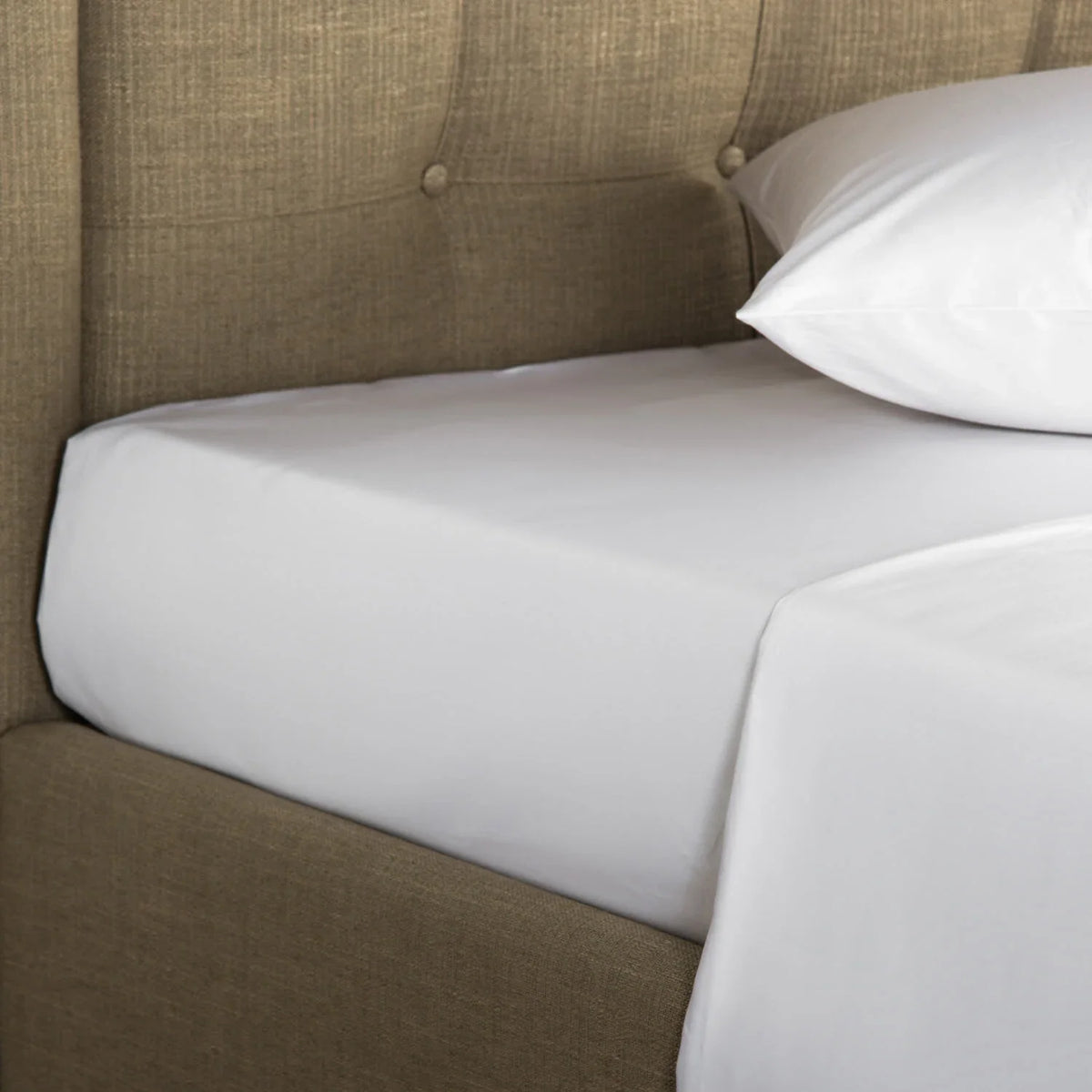
For a luxury bedroom, a fitted sheet should look composed rather than strained. It should sit smoothly beneath the mattress edge, hold its position through the night, and create a clean foundation for crisp flat sheets, a coverlet, or an indulgent duvet. Achieving that finish begins with choosing the proper pocket depth.
What fitted sheet depth means
Fitted sheet depth, also called pocket depth, is the vertical measurement of the sheet’s corner pocket. It determines how far the elasticized edge can travel underneath your mattress. Mattress width and length tell you whether a sheet is designed for a queen, king, or another standard size. Pocket depth tells you whether it will actually stay on.
A standard mattress may be relatively low-profile, while a luxury mattress can have a substantial comfort system, a pillow top, or layered upholstery that increases its height considerably. Add a mattress protector or topper and the final measurement can change again. A queen fitted sheet can therefore be the correct width and length but still be entirely wrong for the bed.
The goal is not simply to find a sheet that can be pulled over the corners. A proper fit leaves enough fabric to anchor securely beneath the mattress without creating bulky folds along the sides. Too little depth causes the elastic to ride upward. Too much can leave excess fabric that wrinkles, shifts, and softens the tailored appearance of the bed.
How to measure mattress depth accurately
Measure your bed when it is dressed as you sleep on it. This is the most reliable approach, especially if your bed includes a quilted protector, a topper, or a removable comfort layer.
Place a tape measure vertically at the side of the mattress, starting at the very bottom edge and ending at the highest point of the sleep surface. Do not measure from the bed frame, foundation, or platform. You are measuring only the upholstered mattress and any layers that will remain beneath the fitted sheet.
If the mattress has a soft pillow top, avoid pressing it down while measuring. Take the dimension from its naturally lofted state. A sheet must accommodate the mattress at rest, not only when it is compressed. For mattresses with prominent edge piping or a particularly sculpted top, measure at more than one point and use the tallest result.
It is also worth checking the manufacturer’s stated dimensions, but treat them as a reference rather than the final word. Real-world height can vary slightly once a mattress has expanded, settled, or been paired with additional bedding layers.
Include protectors and toppers
A common fitting mistake is measuring the bare mattress, then adding a protector and topper afterward. Even a slim protector can alter the fit on a closely sized sheet. A plush topper may add several inches and move a mattress into a different pocket-depth category altogether.
If you prefer the cooling feel of a fitted protector or use a mattress pad seasonally, measure with it in place. This small detail prevents the frustration of buying exquisite sheets that cannot comfortably accommodate your preferred sleep setup.
A practical fitted sheet depth guide
Sheet makers do not use one universal definition for standard, deep, and extra-deep pockets. Always compare the stated pocket depth to your own measurement. Still, these ranges offer a useful starting point for shopping.
| Mattress height | Typical fitted sheet pocket depth |
| --- | --- |
| 8 to 12 inches | Standard pocket, usually 12 to 14 inches |
| 12 to 15 inches | Deep pocket, usually 15 to 17 inches |
| 15 to 18 inches | Extra-deep pocket, usually 18 to 21 inches |
| Over 18 inches | Oversized or specialty pocket, often 22 inches or more |
The sheet pocket should generally exceed your dressed mattress height by about 2 inches. That allowance gives the elastic enough fabric to grip underneath the mattress rather than perch at its edge. For example, a 14-inch mattress with a protector is often best served by a 16-inch pocket, depending on the sheet’s cut and elasticity.
There is one useful qualification: generous pocket depth is not automatically better. On a 10-inch mattress, an extra-deep sheet may technically fit, but excess fabric can gather beneath the corners and introduce unwanted wrinkles across the sleep surface. Refined bedding performs best when its proportions are intentional.
Why luxury bedding needs a precise fit
Premium sheeting is selected for more than thread count. Long-staple cotton, fine percale, luminous sateen, and carefully finished linen each bring distinct drape, breathability, and texture. Yet even exceptional fabric loses some of its appeal when the fitted sheet is under tension or constantly slipping loose.
A properly sized fitted sheet protects the visual architecture of the bed. It keeps the sleep surface smooth, allows the top sheet to fold cleanly, and gives the entire ensemble the poised appearance associated with a considered hotel suite. More practically, it prevents corners from pulling free when you turn during the night.
The fabric construction also affects fit. Percale is often crisp and less forgiving than a more elastic knit, so precise pocket sizing is especially helpful. Sateen may drape more fluidly, but it still needs sufficient depth to remain anchored. Linen sheets can relax beautifully with use, although they should never be asked to compensate for a pocket that is clearly too shallow.
Signs your fitted sheet is the wrong depth
Your bed usually makes the problem obvious. A sheet that pops off at one or more corners, exposes the mattress side, or requires considerable force to install is too shallow. Repeated tension can also place stress on elastic and seams, shortening the useful life of otherwise beautiful bedding.
A sheet may be too deep if fabric bunches under the mattress edge, the corners feel loose, or the center of the sheet develops persistent ripples. These signs are easy to overlook beneath a duvet, but they can affect comfort and make the bed look less polished when turned down.
Do not assume washing is the only explanation when a once-adequate sheet starts to feel tight. Natural fibers can experience modest shrinkage, particularly after high heat drying. If the original fit was already close, laundering may reveal that the pocket depth never offered enough allowance. Follow the care guidance for fine bedding and use lower heat when appropriate to preserve both fabric character and fit.
Details that make a fitted sheet stay put
Pocket depth is the first consideration, but construction matters as well. Look for elastic that runs around the full perimeter rather than only at the corners. Full elastic creates a more consistent hold and is particularly valuable on taller mattresses.
Deep corner construction, reinforced seams, and clearly labeled long and short sides also make daily bed-making more effortless. Some fitted sheets include directional labels such as “top” or “side,” a practical detail that is especially welcome on king-size beds where rotating a large sheet can be surprisingly inconvenient.
For adjustable bases, a secure pocket and full-perimeter elastic become even more significant. The mattress moves through changing positions, which can challenge a shallow or loosely constructed sheet. Measure the mattress in its usual flat position, select a pocket with adequate allowance, and favor flexible, well-finished construction.
Choosing sheets for a complete bed presentation
Once the fitted sheet is correctly sized, the rest of the bed becomes easier to compose. Select a flat sheet with enough width for an elegant cuff, then layer according to season and preference: a lightweight blanket, a tailored coverlet, or a lofty duvet with decorative shams. The fitted sheet may be largely hidden, but it is the layer that gives everything above it a stable, inviting base.
At Sleeping Plaza, the most persuasive bedding choices are those that consider the bed as a complete system. A superb mattress deserves sheeting that fits its dimensions, complements its comfort, and reflects the same attention to material and finish found throughout the room.
Before selecting your next fitted sheet, take two minutes to measure the bed exactly as you use it. That quiet act of precision is often what turns a beautiful set of linens into the kind of bed you look forward to returning to each evening.