أفضل ألحفة ريش الإوز لنوم فاخر
إن اللحاف الاستثنائي حقاً لا يبدو ثقيلاً، ومع ذلك فإنه يحتفظ بالدفء بهدوء وثقة. هذا هو الجاذبية الدائمة لـ أفضل ألحفة ريش الإوز: توازن نادر بين الطابع الهوائي، والعزل المستجيب، والراحة التي تغمرك لتجعل غرفة النوم المجهزة جيداً تبدو مكتملة.
بالنسبة للمنزل الفاخر، يعد اللحاف أكثر من مجرد طبقة عملية؛ فهو يشكل مظهر السرير، وأجواء الغرفة، وجودة النوم ليلة بعد ليلة. الاختيار الجيد يعني النظر إلى ما هو أبعد من مجرد ادعاءات حجم الحشو، مع مراعاة مصدر الريش، وتصميم الغلاف، ودرجة الدفء، وكيفية ملاءمة القطعة لتفضيلات نومك الشخصية.
لماذا يظل ريش الإوز هو المعيار الفاخر
ريش الإوز هو تلك العناقيد الناعمة ثلاثية الأبعاد الموجودة تحت ريش الإوز الخارجي. وعلى عكس الريش المسطح، تخلق هذه العناقيد جيوباً لا حصر لها من الهواء. هذه الجيوب تحتفظ بحرارة الجسم بينما تسمح للحاف بأن يظل خفيفاً بشكل ملحوظ.
يحتوي أرقى ريش الإوز على عناقيد أكبر وأكثر نضجاً من العديد من الحشوات الطبيعية الأخرى. وهذا يخلق عادةً حجماً وعزلاً أكبر بوزن أقل، مما ينتج عنه ذلك الإحساس الخفيف الذي يشبه السحابة والمرتبط بمفروشات السرير الأوروبية الفاخرة. كما يعني أن لحاف ريش الإوز المصنوع جيداً يمكن أن يبدو سخياً بشكل جميل دون أن يكون مقيداً.
ومع ذلك، فإن ريش الإوز ليس متفوقاً تلقائياً في كل الحالات. فقد يكون الشخص الذي يشعر بالحرارة في شقة مدفأة أكثر استفادة من لحاف ريش إوز أخف وزناً بدلاً من خيار الدفء الأعلى. كما يجب على من لديهم حساسية شديدة تجاه الريش أو الغبار مراعاة احتياجاتهم بعناية، حتى عندما يكون اللحاف مغسولاً جيداً ومحاطاً بغلاف منسوج بإحكام. الفخامة تكون أكثر إقناعاً عندما تكون شخصية.
ما الذي يميز أفضل ألحفة ريش الإوز عن غيرها
تتحدد جودة اللحاف من خلال مجموعة من التفاصيل، وليس مجرد رقم رئيسي واحد. قوة الحشو (Fill power) مفيدة، لكنها لا تروي سوى جزء من القصة.
قوة الحشو والانتفاخ
تقيس قوة الحشو مقدار الحجم الذي تشغله أونصة واحدة من الريش. تشير قوة الحشو الأعلى عموماً إلى عناقيد ريش أكبر وانتفاخ أقوى. قد يوفر اللحاف ذو قوة الحشو عالية الجودة (700 أو 800) دفئاً كبيراً بينما يبدو خفيفاً بشكل استثنائي على الجسم.
ومع ذلك، لا تشير قوة الحشو إلى الكمية الإجمالية للريش داخل اللحاف. يمكن أن يحتوي اللحاف الصيفي الخفيف على قوة حشو عالية جداً ولكن بوزن حشو متواضع، بينما يستخدم التصميم الشتوي المزيد من الريش لتوفير عزل أعمق. انظر إلى كلا القياسين معاً، ثم اختر بناءً على درجة حرارة غرفة نومك بدلاً من اختيار الرقم الأكبر ببساطة.
مستوى الدفء المناسب
يجب أن توفر مجموعة المفروشات المختارة بعناية خيارات متعددة لمستويات الدفء. الألحفة خفيفة الوزن مثالية للمناخات الدافئة، ومن يشعرون بالحرارة أثناء النوم، وغرف النوم التي يتم الحفاظ على حرارتها عند مستوى مرتفع. غالباً ما يكون الدفء المتوسط الخيار الأكثر تنوعاً للراحة على مدار العام في العديد من المنازل. أما خيارات الدفء العالي أو الإضافي فهي تناسب الغرف الأكثر برودة وأولئك الذين يفضلون إحساساً يشبه الشرنقة.
بالنسبة للأزواج ذوي التفضيلات المختلفة في درجات الحرارة، يمكن أن يكون لحافان مفردان حلاً أنيقاً على السرير الكبير. يمكن لكل فرد اختيار مستوى الدفء المفضل، بينما يحتفظ السرير بالمظهر الأنيق والجذاب لغرفة النوم الفاخرة.
هيكل يحافظ على توزيع الدفء بالتساوي
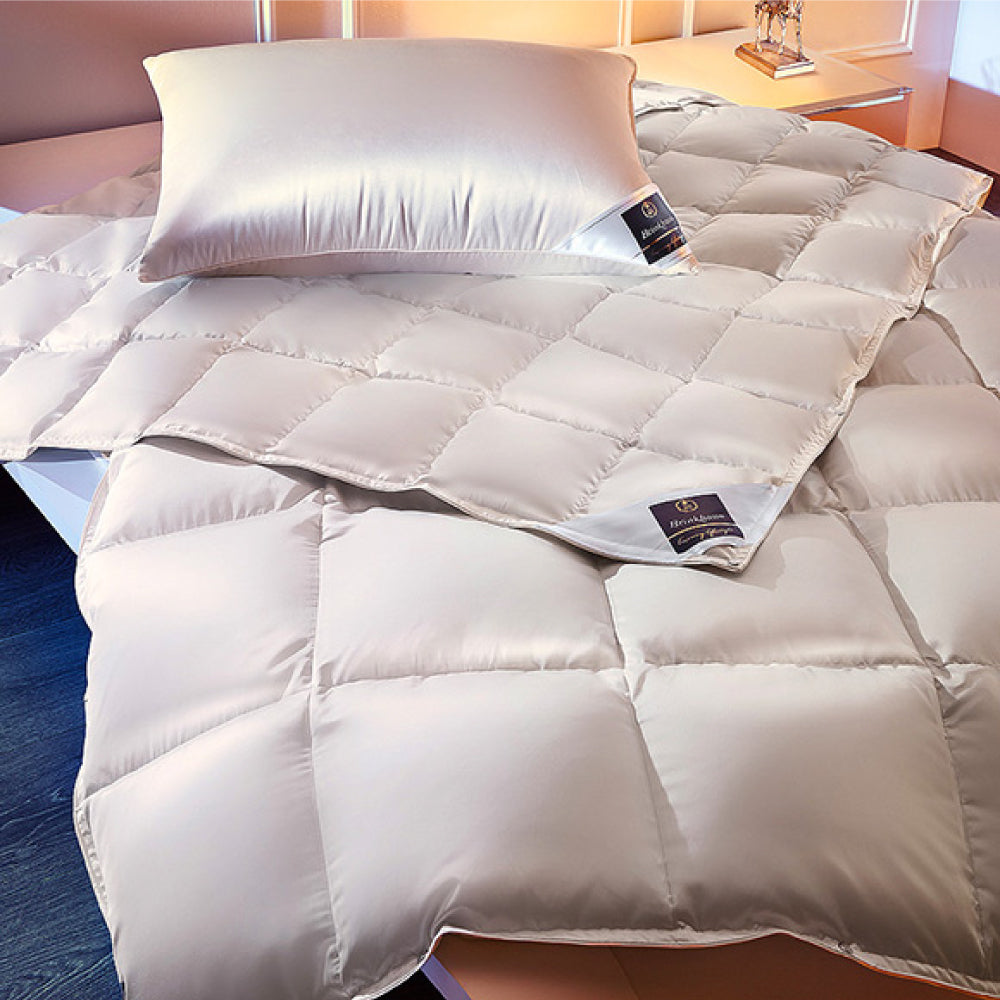
يجب ألا يسمح اللحاف الجيد للريش بالتجمع في الزوايا أو ترك بقع باردة وفارغة عبر السرير. يُعد تصميم المربعات الحاجزة (Baffle-box) مفضلاً لأن جدران النسيج الداخلية تخلق حجرات فردية، مما يسمح للريش بالانتفاخ بالكامل مع الحفاظ على توزيعه بالتساوي. كما يساعد هذا الهيكل في منع خطوط الخياطة النافذة التي قد تخلق مناطق أكثر برودة في التصاميم البسيطة.
توفر حجرات المربعات الأصغر توزيعاً أكثر تحكماً؛ بينما يمكن للحجرات الأكبر أن توفر انسيابية أكثر امتلاءً. لا يعتبر أي منهما أفضل بطبيعته، بل يكمن التمييز في التنفيذ، وكمية الحشو، ومستوى الدفء المقصود.
نسيج الغلاف
يستحق الغلاف نفس القدر من الاهتمام الذي يولى للحشو. يوفر القطن طويل التيلة، خاصة في تشطيب الساتين الناعم أو القطن المقرمش، ملمساً راقياً ويساعد في حماية الريش بالداخل. يمنع النسيج المحبوك بإحكام والمقاوم لتسرب الريش خروج الريش مع الحفاظ على تهوية كافية ليتمكن اللحاف من تنظيم درجة الحرارة بشكل مريح.
تجنب الحكم على القماش بعدد الخيوط وحدها. قد يبدو عدد الخيوط المرتفع جداً مثيراً للإعجاب، لكن الغلاف الأكثر فخامة هو الذي يبدو ناعماً وهادئاً، ويقاوم هجرة الريش، ويسمح للهواء بالحركة بشكل طبيعي. الهدف هو الحصول على طبقة نظيفة ومفصلة تبدو رائعة تحت غطاء اللحاف.
كيف تختار لحافاً لغرفة نومك
ابدأ بدرجة حرارة غرفتك، وليس الفصل المكتوب على الملصق. غالباً ما تكون غرف النوم ذات التدفئة المركزية القوية، أو التعرض الوفير للشمس، أو المراتب والطبقات العلوية السميكة أكثر دفئاً مما هو متوقع. وعلى العكس من ذلك، قد تتطلب المنازل التاريخية، والمناخات الأكثر برودة، والغرف ذات العزل المحدود لحافاً أكثر سمكاً.
ثم فكر في كيفية تفضيلك للنوم. إذا كنت غالباً ما تدفع الأغطية بعيداً في الصباح الباكر، اختر مستوى دفء أخف أو نموذجاً متوسط الوزن يتمتع بالتهوية. أما إذا كنت تستمتع بشعور الاستلقاء تحت طبقة سخية من الدفء، فيمكن للحاف ريش الإوز الشتوي أن يخلق تلك التجربة المجددة للنشاط التي تشبه الإقامة في منتجع.
كما أن غطاء اللحاف يغير المعادلة أيضاً. يشعرك قطن البركال بالانتعاش والخفة، بينما يوفر الساتين تشطيباً أكثر نعومة وعزلاً. يجلب الكتان ملمساً مريحاً وتهوية طبيعية. يمكن لغطاء أثقل أو بطانية إضافية أو غطاء مزخرف أن يجعل اللحاف المتوسط أكثر دفئاً، خاصة في الأشهر الانتقالية.
الحجم مهم أيضاً. بالنسبة لسرير مقاس كينج، يوفر اللحاف كبير الحجم انسيابية أكثر دراماتيكية ويقلل من شد الأغطية الذي قد يقطع النوم عند مشاركة السرير. يجدر بك قياس عمق المرتبة ومراعاة الطول المطلوب تدليه على كل جانب قبل اختيار اللحاف والغطاء معاً.
المصادر المسؤولة جزء من الجودة الحقيقية
على مستوى المنتجات الفاخرة، يجب أن تسير الراحة والضمير جنباً إلى جنب. اسأل عما إذا كان الريش يأتي من مصادر يمكن تتبعها وعما إذا كانت الشركة المصنعة تتبع معايير رعاية الحيوان المعترف بها. يمكن أن توفر الشهادات طمأنينة مفيدة، ولكن يجب على دار المفروشات المحترمة أن تكون شفافة أيضاً بشأن موادها وعملياتها ومعايير الإنتاج.
النظافة ضرورية بنفس القدر. فالريش المغسول والمعالج بشكل صحيح ليس له رائحة تقريباً ويجب أن يحتفظ بانتفاخه دون أن يبدو دهنياً أو مضغوطاً. يقوم أفضل المصنعين بفرز ريشهم بعناية، ومطابقته مع الهيكل المناسب، وإنهاء كل لحاف بالاهتمام المتوقع لاستثمار طويل الأمد في غرفة النوم.
العناية بلحاف ريش الإوز
ريش الإوز مرن، لكنه يستفيد من العناية المدروسة. قم بتهوية اللحاف بانتظام عن طريق وضعه بشكل مسطح أو تعليقه في غرفة جيدة التهوية بعيداً عن أشعة الشمس المباشرة والقوية. هز اللحاف برفق يعيد توزيع العناقيد ويحافظ على انتفاخه الجذاب.
استخدم دائماً غطاءً للحاف، فهو يحمي الغلاف من زيوت الجسم ويقلل من الحاجة إلى التنظيف المتكرر. يجب تنظيف معظم ألحفة الريش الفاخرة احترافياً عند الضرورة فقط، مع اتباع تعليمات المصنع. الغسيل المتكرر يمكن أن يضع ضغطاً غير ضروري على الغلاف والحشو.
عند تخزين اللحاف بين المواسم، تأكد من أنه جاف تماماً وضعه في كيس تخزين قطني يسمح بمرور الهواء بدلاً من حاوية بلاستيكية محكمة الإغلاق. يحتاج الريش إلى مساحة ليستعيد حالته. قد يوفر الضغط المساحة مؤقتاً، لكن الضغط الطويل قد يقلل من الطابع المنفوش الذي يجعل اللحاف ممتعاً للغاية.
طبقة مدروسة لنوم أفضل
تجمع أفضل ألحفة ريش الإوز بين التميز في المواد والراحة العملية: انتفاخ سخي، ودرجة الدفء المناسبة، وغلاف بلمسة نهائية جميلة، وحرفية مبنية لسنوات من الاستخدام. لقد صُممت لتختفي في تجربة النوم بينما ترفع من قيمة كل لحظة تقضيها في السرير.
تعامل مع الاختيار كما تفعل مع أي عنصر دائم في غرفة نوم راقية. اختر الدفء الذي يناسب غرفتك، ونسقه مع غطاء تحب لمسه، وامنحه العناية المخصصة للأشياء التي صُنعت لتصبح جزءاً من الحياة اليومية. المكافأة ليست مجرد سرير أكثر دفئاً، بل غرفة نوم تدعوك للبقاء فيها لفترة أطول قليلاً.