What Thread Count Feels Best for Luxury Sheets?
The difference is often felt before it is seen: a sheet that glides smoothly over the skin, stays cool through the night, and settles into the bed with an inviting weight. For shoppers asking what thread count feels best, the answer is rarely the highest number on the label. The most satisfying sheets are defined by a considered balance of fiber quality, weave, finish, and personal preference.
A beautifully made bed should feel as considered as it looks. Thread count offers one useful point of comparison, but it cannot tell the full story of whether linens will feel crisp, silky, airy, or enveloping. Understanding what sits behind the number makes it far easier to choose bedding that delivers genuine comfort night after night.
What Thread Count Feels Best in Practice?
For many luxury-sheet buyers, the sweet spot lies between 300 and 500 thread count when the sheets are made from high-quality, long-staple cotton. Within this range, fabric can feel smooth and substantial without becoming overly dense or limiting airflow. A 300-thread-count percale may feel fresh, cool, and tailored, while a 400-thread-count sateen often has a more fluid, luminous softness.
That said, the ideal feel depends on the experience you want from your bed. Those who sleep warm or appreciate the crisp sensation of freshly pressed hotel linens often favor a lower to mid-range thread count in a breathable percale weave. Those drawn to a softer hand and a more sumptuous drape may prefer sateen in the 400 to 600 range.
Numbers above 800 are not automatically a mark of superior luxury. In some cases, very high counts are achieved with multi-ply yarns, where several thinner fibers are twisted together and counted separately. This can create a heavier fabric, but not necessarily a finer or more comfortable one. A well-crafted 400-thread-count sheet made with exceptional cotton can feel notably more refined than a poorly made 1,000-thread-count alternative.
Thread Count Is Only One Part of the Feel
Thread count measures the number of horizontal and vertical threads woven into one square inch of fabric. It offers a clue about density, but it says little about the character of the fibers themselves. A sheet's tactile quality begins with the cotton.
Long-staple and extra-long-staple cottons use longer individual fibers, allowing yarns to be spun finer, smoother, and stronger. The resulting fabric tends to pill less, age more gracefully, and develop an increasingly inviting hand over time. This is where true craftsmanship becomes apparent: not in a dramatic number, but in yarn quality, precise weaving, and finishing techniques that respect the natural beauty of the fiber.
Fiber quality also affects breathability. Fine, long-staple cotton can create a closely woven sheet that still permits air to circulate. By contrast, a dense sheet made with shorter, coarser fibers may feel stiff, trap warmth, or lose its smoothness after repeated laundering.
For a premium bedroom, it is worth reading beyond the thread-count claim. Look for clear information about fiber origin, staple length, weave, and care. Transparency is often a stronger indicator of quality than an oversized number printed prominently on the package.
Choose the Weave Before the Number
The weave has a direct influence on the way sheets feel against the body and the way they complement a room's overall mood. The two most recognizable cotton weaves are percale and sateen, each offering a distinct kind of luxury.
Percale: Crisp, Cool, and Tailored
Percale is woven in a simple one-over, one-under pattern. It has a matte finish, a light and airy structure, and the clean, cool hand many people associate with a five-star hotel bed. A 300 to 400 thread count is often ideal for percale because it retains the weave's natural breathability and gentle crispness.
This is an especially appealing choice for warm sleepers, humid climates, and anyone who prefers bedding with a freshly laundered, quietly polished character. Percale typically softens with use while retaining its tailored appearance, making it an excellent foundation for a bedroom that feels serene rather than overly formal.
Sateen: Smooth, Soft, and More Enveloping
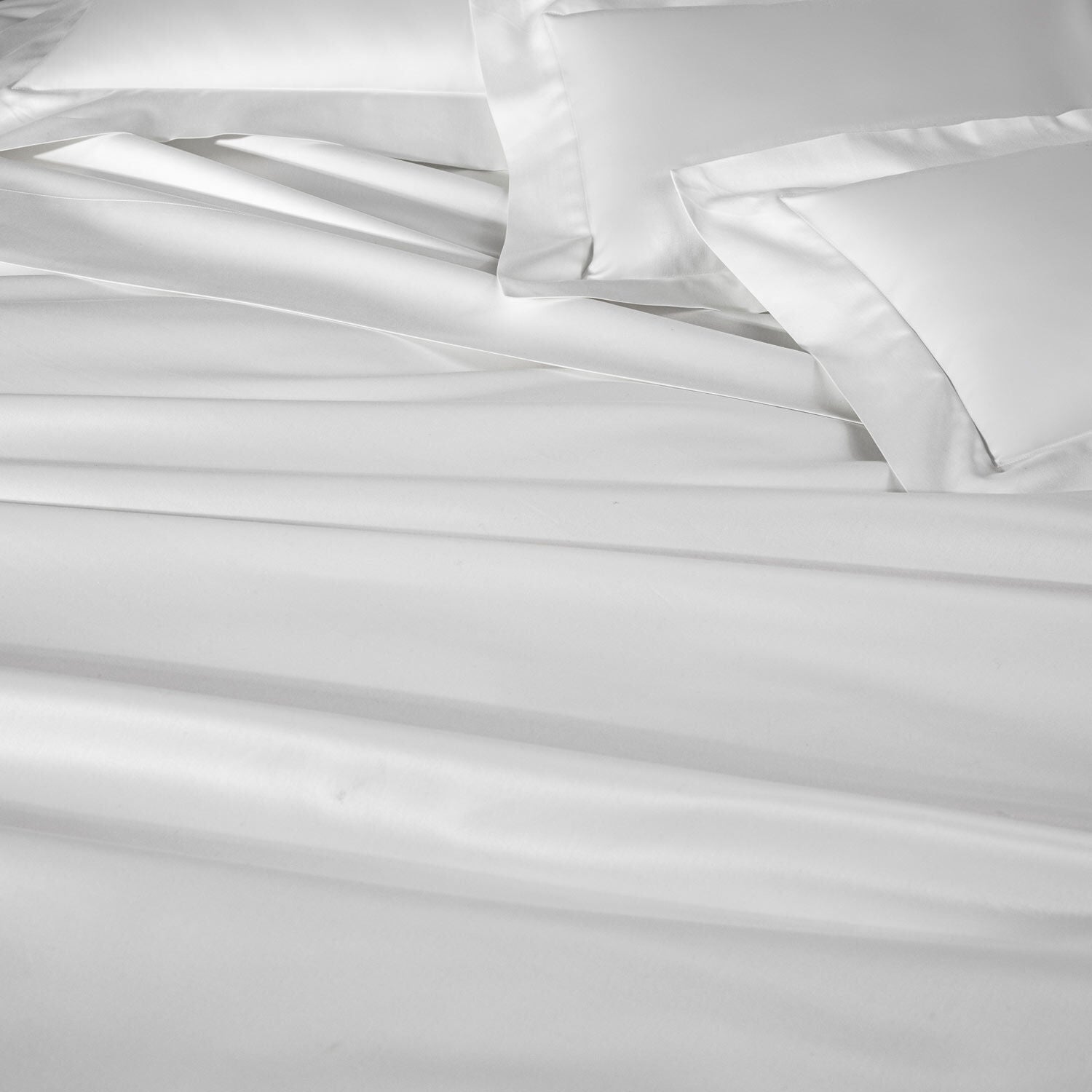
Sateen uses a different weave construction, with more threads floating across the surface. This gives the fabric its signature smoothness, subtle sheen, and graceful drape. A thread count between 400 and 600 often feels especially luxurious in sateen, offering a supple surface without unnecessary heaviness.
Sateen suits sleepers who enjoy a warmer, silkier sensation and a bed with visual richness. Its gentle luster pairs beautifully with layered coverlets, decorative cushions, and a more expressive bedroom palette. Because sateen can retain more warmth than percale, it is often particularly welcome in cooler rooms or for those who find crisp sheets too brisk against the skin.
The Best Range for Your Sleeping Style
There is no single thread count that feels best for everyone. The right choice begins with how you sleep, not simply how a fabric is marketed.
If you tend to overheat, favor breathable long-staple cotton percale in the 250 to 400 range. It will feel lighter on the body and allow more air circulation. If you want a balanced, all-season sheet with a smooth finish, 400-thread-count cotton is a dependable and refined place to begin. If your preference is for a richer, softer, more cocooning bed, consider a 500 to 600 thread count in sateen.
Climate matters as well. In a warmer home, denser is not always better. A lighter, beautifully woven sheet can create a more comfortable sleep environment than one that feels impressive in the hand but holds onto heat. Conversely, a higher-density sateen can bring welcome comfort to a cool bedroom, particularly when paired with a lightweight duvet and a breathable mattress protector.
Your mattress also changes the experience. A pressure-relieving, highly supportive mattress may feel best with a sheet that has a little more fluidity, such as sateen. A responsive mattress with a cooler surface may pair naturally with percale's clean, crisp finish. Luxury is not only about choosing exceptional pieces individually. It is about making sure they work together.
Why Extremely High Thread Counts Can Disappoint
The appeal of a four-digit thread count is understandable. It suggests abundance and indulgence. Yet a sheet can become too tightly woven, too heavy, or less breathable when thread count is pushed beyond what the fiber and weave can support naturally.
In addition, some manufacturers use double- or triple-ply yarns to elevate the stated count. These yarns are not inherently poor quality, but the number can make comparison difficult. A lofty count may conceal a fabric that feels thicker rather than finer.
The better question is whether the sheet feels balanced. Does it have enough body to drape elegantly? Does it breathe? Is the surface smooth without feeling slippery? Does it recover well after washing? These qualities signal lasting comfort and thoughtful construction far more reliably than a claim of 1,000 threads per square inch.
How to Judge Luxury Sheets Beyond the Label
When possible, touch the fabric before making a final choice. Run it between your fingertips, press it against the inside of your wrist, and notice whether it feels cool, soft, crisp, or overly coated. Fine sheets should feel inviting without relying on a synthetic slickness or heavy chemical finish.
Examine the finishing details, too. Neat hems, precise stitching, generous dimensions, and carefully finished pillowcases reflect the same standards that shape the fabric itself. Premium bedding should fit the mattress gracefully, wash well, and become more personal with every use.
At Sleeping Plaza, a curated bedding selection makes it possible to consider thread count in its proper context: alongside craftsmanship, weave, material, and the atmosphere you want to create. The goal is not to pursue the largest number. It is to choose linens that make getting into bed feel like one of the finest moments of the day.
The sheet that feels best is the one that supports your preferred temperature, texture, and ritual of rest. Choose a quality fiber and a weave you genuinely enjoy, then let the bed become softer, more familiar, and more inviting with every beautifully lived-in night.