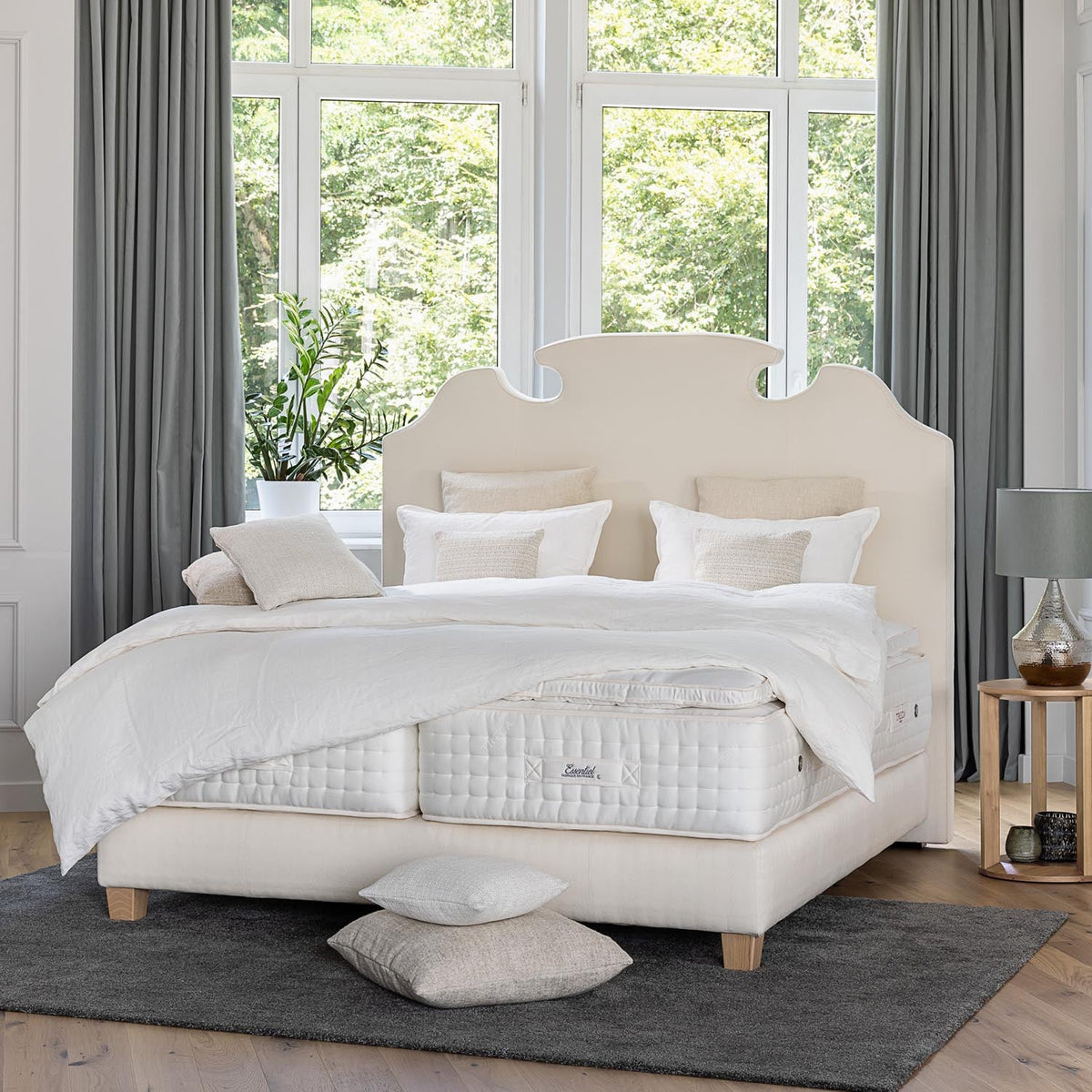
Upholstered Bed Buying Guide for Refined Bedrooms
A bed is the largest visual gesture in the bedroom, and an upholstered design gives that gesture softness, depth, and unmistakable presence. This upholstered bed buying guide is designed for those choosing more than a place to sleep: it is for creating a composed, comfortable retreat where exceptional materials and thoughtful proportions set the tone.
From a channel-tufted statement headboard to a quietly tailored platform frame, the right upholstered bed should work as beautifully with your mattress as it does with the architecture of the room. The most successful choice balances visual character with practical details that shape comfort for years to come.
Start With the Bedroom, Not the Bed
An upholstered bed can make a room feel warmer and more finished, but scale must lead the decision. A generous headboard may be ideal behind a king mattress in a primary suite with high ceilings, while the same silhouette can overwhelm a more compact bedroom. Measure the wall where the bed will sit, including the height and placement of windows, sconces, artwork, and architectural details.
Leave enough clearance to move comfortably around the bed and to open drawers, wardrobe doors, or an ensuite door without interruption. For most bedrooms, keeping approximately 24 to 30 inches of passage space on each accessible side feels considered rather than cramped. If the room is narrow, a slim platform bed or a design with a lower-profile footboard can preserve visual openness.
Headboard height deserves equal attention. A low, streamlined upholstered headboard creates an understated, contemporary mood. A taller design brings a more dramatic, hotel-inspired sense of occasion and offers a generous surface for reading in bed. Consider what will sit above it. In a room with a prominent window or a large piece of art, a quieter headboard may allow those elements to remain in balance.
Choose a Silhouette That Suits Your Interior
Upholstery gives a bed remarkable range. The construction may be fundamentally simple, but the silhouette determines whether it reads as tailored, romantic, architectural, or relaxed.
A clean-lined upholstered platform bed is especially suited to modern and transitional interiors. Its restraint allows fine linens, textured throws, and decorative pillows to carry the seasonal expression. Wingback headboards bring a more enveloping feel, framing the sleep space with a classic, cocooning profile. They are particularly handsome in larger rooms, where their side panels have space to make an impression.
Tufting introduces dimension and a sense of traditional craftsmanship. Deep button tufting is formal and expressive, while channel tufting feels more current, drawing the eye vertically or horizontally depending on its orientation. For a softer, more relaxed bedroom, look for gently curved edges, a lightly padded headboard, or a loose, tailored profile rather than sharply structured geometry.
The footboard should support the same design language. A full upholstered footboard looks especially polished in a spacious suite, but it can visually shorten a smaller room. An open frame or low foot-end offers an elegant alternative when maintaining an airy feeling matters most.
Upholstered Bed Buying Guide: Fabric Matters
Fabric is where an upholstered bed becomes personal. It influences the room's color, texture, maintenance requirements, and perceived level of luxury. Before choosing a swatch, consider daylight, the presence of pets or children, and whether the bed is intended for a primary residence, guest room, or finely appointed second home.
Linen and linen-blend upholstery offer an organic, softly tailored character. Their subtle irregularity brings ease to a sophisticated bedroom, especially when paired with crisp cotton bedding or layered neutral textiles. Pure linen can crease naturally, which is part of its appeal for some buyers but may not suit those seeking a consistently pristine appearance.
Velvet provides richer color and a more dramatic tactile experience. It catches the light beautifully, lending depth to jewel tones, warm neutrals, and charcoal shades. A high-quality performance velvet can also be a practical choice, though the pile may show directional shading. This is normal, not a flaw, and contributes to velvet's distinctive visual movement.
Woven textures such as bouclé, basketweave, and finely nubby fabrics add quiet dimension without demanding attention. They suit serene, layered interiors but should be evaluated closely for abrasion resistance if the bed will see frequent use. Leather or leather-like upholstery offers a sleek, tailored option that is easy to wipe clean, although it generally creates a cooler, more structured look than fabric.
Ask about cleaning guidance before committing. Some premium fabrics require professional upholstery care, while others are designed for spot cleaning. A fabric that suits your household will remain beautiful longer than a delicate choice that creates anxiety every time a morning coffee enters the bedroom.
Look Beneath the Upholstery
The most compelling beds are not defined by fabric alone. A well-made upholstered bed needs a stable internal structure, secure joinery, and a support system compatible with the mattress you intend to use. Fine upholstery cannot compensate for a frame that shifts, creaks, or lacks adequate center support.
Solid wood or engineered hardwood frames are common in quality upholstered beds, often paired with reinforced side rails and central legs for larger mattress sizes. For a queen, king, or California king, center support is essential. It protects both the frame and the mattress by distributing weight more evenly across the foundation.
Determine whether the bed uses a slatted platform, requires a box spring, or is designed for a specific foundation. Many contemporary upholstered beds are built for mattress-on-slat support, creating a clean, low-profile presentation. The spacing and strength of the slats matter, particularly with heavier premium mattresses. Closely spaced, firmly secured slats generally provide more consistent support than widely spaced, flexible alternatives.
Bed height is also a comfort decision. Add the height of the frame, foundation if required, and mattress to understand where the top of the mattress will sit. A higher sleep surface can feel easier to get in and out of, while a lower profile often complements a modern interior. There is no universal ideal; the right height depends on your mobility, mattress depth, bedside table proportions, and personal preference.
Match the Frame to Your Mattress and Sleep Routine
A beautifully upholstered bed should enhance the complete sleep system rather than compete with it. If you have selected a deep luxury mattress, check that the headboard remains visible above it. A headboard that seems tall in a showroom may appear modest once paired with a substantial mattress and decorative pillows.
Consider how you use the bed outside sleeping hours. Readers may value a plush, supportive headboard with enough height for comfortable reclining. If you enjoy breakfast in bed or work from a laptop occasionally, a gently angled or deeply padded design offers greater comfort than a thinly upholstered panel.
For adjustable bases, compatibility is non-negotiable. Not every upholstered bed frame accommodates an adjustable foundation, and some designs need a specific configuration to preserve the intended look. Confirm dimensions, clearance, and installation requirements before ordering. This small step avoids compromising either the design or the performance of your sleep setup.
Storage beds can be an excellent solution where space is at a premium. A lift-up ottoman base conceals linens, seasonal bedding, or extra pillows without introducing additional furniture. The trade-off is a more substantial visual footprint and a mechanism that should be assessed for smooth operation and reliable construction. In a room with ample storage, a standard upholstered frame may offer a lighter, more refined appearance.
Create a Considered Color Story
An upholstered bed often becomes the room's anchor, so its color should have enough longevity to outlast short-lived decorating impulses. Soft ivory, warm beige, mushroom, stone, and pale gray create a versatile foundation for exquisite bedding and changing accents. These shades are forgiving in design terms, though very light upholstery requires a realistic approach to care.
Deeper tones such as ink, forest green, tobacco, or espresso create intimacy and visual confidence. They are effective in bedrooms with generous natural light or layered lighting, where the fabric's depth can be appreciated. If the room is dark or compact, balance a deeper bed with lighter walls, luminous bedding, and mirrors or reflective accents.
Do not select the fabric in isolation. Review it beside flooring, paint, drapery, nightstands, and your preferred bedding palette. The right neutral may contain warm, cool, or mineral undertones that become apparent only when placed in context. A sample viewed morning and evening will reveal far more than a quick showroom glance.
Details That Separate a Good Choice From a Lasting One
Before placing an order, verify the bed's overall dimensions, mattress-size specifications, assembly requirements, and delivery access. Measure hallways, staircases, elevators, and tight turns, particularly for tall one-piece headboards. Premium furniture deserves a graceful arrival, not an avoidable complication at the door.
Examine the tailoring as closely as you would the shape. Seams should be straight, piping should sit evenly, and corners should feel deliberate rather than strained. If the headboard is tufted, the pattern should be balanced. These details speak to the care behind the piece and remain visible long after the novelty of a new purchase fades.
Finally, think in layers. An upholstered bed is at its most inviting when paired with bedding that complements its texture rather than obscures it. Crisp percale can sharpen the look of a plush velvet frame; a washed coverlet can soften a more formal silhouette. At Sleeping Plaza, the most refined bedrooms come together as complete compositions, where the bed, mattress, pillows, and linens each have a role in the quality of rest.
Choose the upholstered bed that makes you want to slow down at the end of the day. When its proportions feel right, its fabric invites touch, and its construction supports the mattress beautifully, the bedroom gains not simply a focal point, but a place of genuine restoration.