Premium Duvet Insert Guide for Better Sleep
A beautifully made bed begins with what cannot be seen at first glance: the layer that creates its loft, warmth, and inviting sense of ease. This premium duvet insert guide is designed to help you select that essential layer with the same discernment you would bring to a fine mattress, tailored upholstery, or exceptional linen.
A duvet insert is not simply a source of warmth. Its fill, construction, outer fabric, and dimensions influence how the bed feels across the night and how elegantly it sits beneath a cover. The right choice should feel considered rather than conspicuous - generously comfortable, breathable, and suited to the way you sleep.
What Defines a Premium Duvet Insert?
Luxury is found in the details that hold up over years of use. A premium duvet insert typically combines superior fill materials with carefully engineered construction and a refined cotton shell. It should distribute warmth evenly, maintain its loft, and offer a sensation of lightness that does not compromise insulation.
The difference is especially clear once the bed is made. A well-crafted insert fills a quality duvet cover with a smooth, tailored drape rather than leaving hollow corners or creating bulky, uneven sections. More importantly, it creates a stable sleeping climate: warm when the room is cool, yet less likely to feel stifling as temperatures change overnight.
Price alone does not determine quality. The most appropriate insert is the one whose warmth, weight, and dimensions align with your bedroom, body temperature, and preferred sleep environment.
Premium Duvet Insert Guide: Start With Fill
Fill is the heart of a duvet insert, and it determines much of its character. Down remains the classic choice for exceptional loft and gentle warmth. Its three-dimensional clusters trap air efficiently, which is why a high-quality down duvet can feel wonderfully insulating without feeling heavy across the body.
Down for airy, responsive comfort
Down is often favored by those who want the traditional luxury hotel-bed experience: lofty, soft, and enveloping. Look beyond fill weight alone. Fill power is a useful measure of how much space the down occupies. Higher fill power generally indicates greater loft and insulation for less weight, giving the insert a more buoyant feel.
The origin, sorting, and cleanliness of down also matter. Carefully selected, high-quality down offers more consistent clusters and better long-term resilience. A densely woven cotton shell helps keep the fill contained while providing a smooth, quietly luxurious surface beneath the duvet cover.
Down does require thoughtful selection for those with sensitivities. Modern cleaning processes and tightly woven covers can be helpful, but individual comfort should always guide the decision. If allergies are a concern, review the product's material and care specifications carefully rather than assuming every down insert will feel the same.
Down alternative for easy-care versatility
Premium down-alternative inserts have earned their place in refined bedrooms, particularly for shoppers who prioritize uncomplicated laundering, consistent structure, or an animal-free option. The best versions use sophisticated microfiber fills that mimic the soft loft and even warmth of down without the dense, flat feel associated with less considered synthetic bedding.
A down alternative is often an excellent choice for guest rooms, second homes, and homes where frequent washing is expected. The trade-off is that it may not offer the same naturally adaptive breathability or delicate lightness as fine down. Quality construction narrows that gap considerably, so focus on the overall finish rather than the fill category alone.
Wool and silk for distinctive sleep climates
Wool is naturally moisture-managing and can be an elegant option for sleepers who experience temperature fluctuations. It tends to feel more substantial and less cloud-like than down, but its ability to regulate humidity can create an exceptionally comfortable bed.
Silk-filled inserts are prized for their smooth, lightweight feel and natural temperature moderation. They are especially appealing in warmer climates or for sleepers who prefer a less voluminous profile. Both wool and silk offer distinctive benefits, though availability, care requirements, and personal preference should shape the final choice.
Choose Warmth by Room, Not Just Season
A common mistake is selecting the warmest available duvet and expecting it to suit every night of the year. Bedrooms vary widely. A well-insulated home, a warm sleeper, and a room kept above 68 degrees may call for a lightweight insert even during winter. Conversely, a cool bedroom or a sleeper who prefers ample warmth may benefit from a medium or all-season option.
Lightweight inserts are ideal for warm bedrooms, summer use, and sleepers who run warm. Medium-weight or all-season inserts suit many American homes and provide balanced comfort through much of the year. Winter-weight inserts are best reserved for genuinely cool rooms or those who enjoy a deeply cocooning bed.
For the most tailored solution, consider a layered approach. A lightweight insert paired with a blanket or coverlet offers flexibility and visual richness. Alternatively, some premium designs use two separate layers that can be fastened together, allowing you to adjust the bed with the seasons without sacrificing a polished appearance.
Construction Is What Keeps Comfort Even
Even the finest fill can underperform if it shifts into corners or forms cold spots. Construction is what preserves an insert's shape and warmth over time.
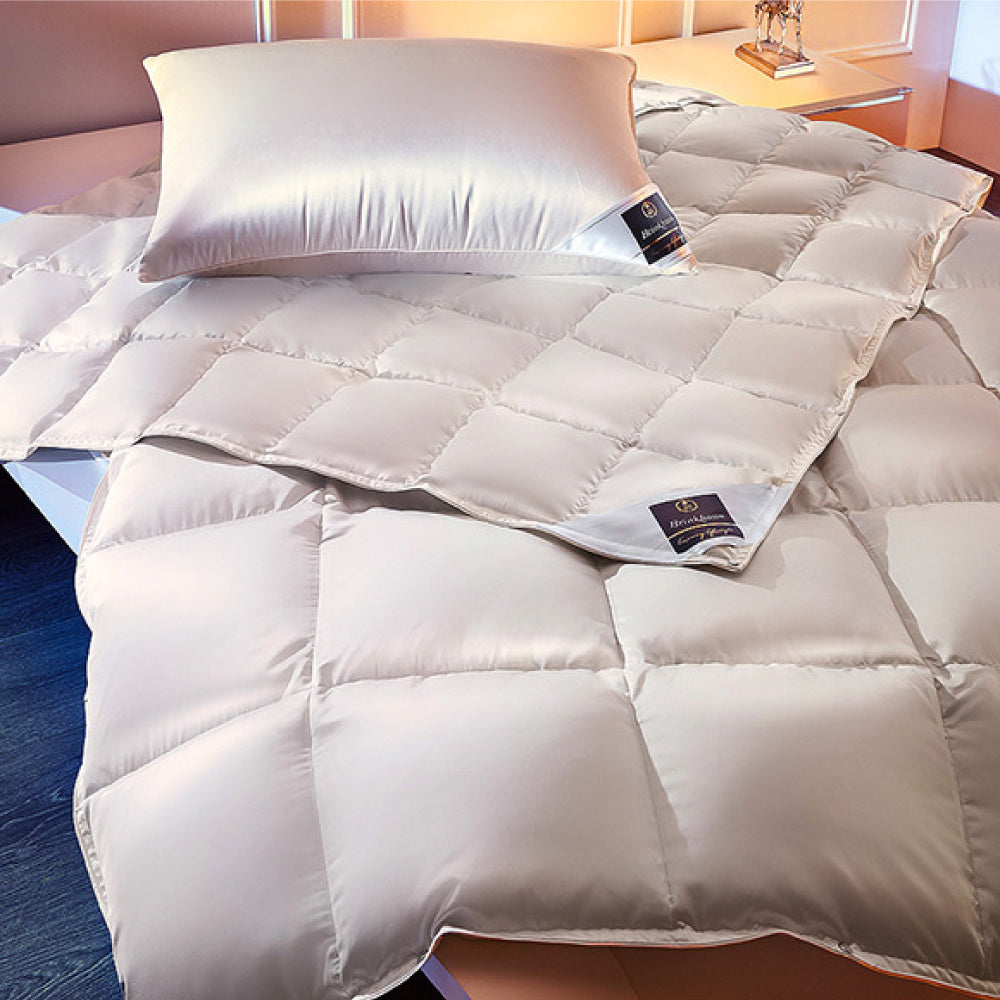
Baffle-box construction is among the most desirable choices for down. Internal fabric walls create individual chambers, giving the fill room to loft while keeping it evenly distributed. This produces a fuller, more dimensional look and reduces the risk of cold lines between sections.
Sewn-through construction stitches the top and bottom layers directly together. It can be appropriate for lightweight inserts, where a slimmer profile is welcome, but it generally provides less loft than baffle-box designs. Channel construction, with longer stitched rows, may appeal to those who prefer a sleeker appearance or like to shift fill distribution slightly.
Also consider the shell. Long-staple cotton, a smooth sateen weave, or crisp cotton cambric can enhance the insert's finish and breathability. A quality shell should feel soft without being so delicate that it compromises durability. Small details, including reinforced edging and corner loops, make everyday bed-making more satisfying and help the insert stay properly positioned inside its cover.
Size for a More Generous Bed
A duvet insert should complement the proportions of both your mattress and your bed frame. Standard sizing can be a starting point, but it is not always the most luxurious choice. Many people choose an oversized insert and cover for a fuller drape, particularly on deep mattresses, platform beds, or king-size beds that benefit from more visual balance.
Before purchasing, measure the mattress width, length, and depth, then consider how much drop you want at each side. A generous overhang can soften the scale of a large bed and create the enveloping presentation associated with a finely appointed suite. However, excessive size can make the duvet difficult to manage and may overwhelm a low-profile frame.
The insert and duvet cover should be closely matched. An insert that is dramatically smaller than its cover tends to shift and leave the corners looking empty. One that is too large can bunch and distort the cover's shape. When dimensions vary by brand, use the actual measurements rather than relying on labels alone.
Complete the Bed With the Right Cover
Your duvet cover is the tactile and visual expression of the insert beneath it. Crisp percale offers a tailored, cooler feel. Cotton sateen brings a subtle sheen and a smoother hand, while linen lends relaxed texture and breathable character. Each changes the final feel of the bed, even when the insert remains the same.
For a formal, layered bedroom, a lofty down insert beneath finely woven sateen creates an especially elegant result. For a more relaxed, coastal, or contemporary interior, a lighter insert with linen can feel composed without appearing overly styled. The goal is not maximum volume for its own sake, but a bed that looks inviting and feels proportioned to the room.
At Sleeping Plaza, a curated approach allows the duvet insert, cover, pillows, and mattress to be considered as one complete sleep environment rather than isolated purchases.
Care That Protects Loft and Longevity
A duvet cover is the insert's first line of protection and should be used consistently. Air the insert periodically, ideally on a dry day away from prolonged direct sunlight, and fluff it gently to restore its loft. Most inserts do not need frequent washing, which can place unnecessary stress on both fill and shell.
Always follow the care label. Some premium inserts are suitable for professional cleaning, while others can be washed at home in a sufficiently large machine and dried thoroughly on low heat. Incomplete drying is particularly problematic for natural fill, so patience matters. Store the insert in a breathable cotton bag rather than sealed plastic, and avoid compressing it for extended periods.
Choose the duvet that makes you look forward to turning down the bed. When the warmth is right, the fill remains beautifully lofted, and the proportions suit your room, that final layer becomes an everyday source of exceptional comfort.