ملاءات الحرير مقابل الكتان لنوم فاخر
إن السرير المصنوع بعناية فائقة يجب أن يمنحك شعوراً بالاهتمام بقدر ما يبدو في مظهره. إن المفاضلة بين ملاءات الحرير وملاءات الكتان ليست مجرد مسألة ألوان أو أسعار أو ما يبدو جذاباً في صور غرف النوم المنسقة. فهما ألياف طبيعية متميزة ولكل منهما علاقة مختلفة بدرجة الحرارة والملمس والانسدال والعناية اليومية. يعتمد الاختيار الصحيح على طبيعة نومك ونوع الملاذ الذي ترغب في أن تكون عليه غرفة نومك.
يوفر الحرير لمسة نهائية مصقولة وحسية تضفي أناقة فورية على السرير. بينما يضفي الكتان طابعاً من الرقي المريح والعفوي الذي يزداد جاذبية مع كثرة الاستخدام. يمكن لكلاهما أن يكون جزءاً من خزانة مفروشات فاخرة، لكنهما يخدمان طقوساً مختلفة.
الحرير مقابل الكتان: الاختلاف الجوهري
الحرير هو ألياف بروتينية، تُنتج تقليدياً من شرانق دودة القز. وتخلق خيوطه الناعمة والدقيقة سطحاً ذو لمعان خفيف وانسدال انسيابي. في المفروشات عالية الجودة، يمنح الحرير شعوراً بالبرودة عند اللمس، وخفة عند ملامسته للجلد، ورفاهية هادئة. وغالباً ما يُختار لملمسه قليل الاحتكاك، وهو ما قد يكون جذاباً بشكل خاص لأولئك الذين يفضلون سطحاً لطيفاً للشعر والجلد.
أما الكتان فيُصنع من الكتان، وهي ألياف نباتية تحظى بالتقدير لقوتها وملمسها المميز. ويتميز بنسيج أكثر وضوحاً، ولمسة نهائية مطفأة، وطابع مألوف ومريح. ملاءات الكتان الفاخرة لا يُنتظر منها أن تبدو ملساء أو ناعمة تماماً. فجمالها يكمن في ملمسها الناعم الخفيف ومظهرها المتجعد بعفوية الذي يبدو متناسقاً بدلاً من أن يكون بسيطاً للغاية.
التباين بينهما واضح: الحرير أنيق ولامع، بينما الكتان ملمسي وهادئ. يميل أحدهما نحو الفخامة الرسمية، والآخر نحو الرقي الأوروبي المريح.
أي القماشين يمنح نوماً أكثر برودة؟
يمكن أن تكون كلتا الخامتين خيارين ممتازين لمن يعانون من الحرارة أثناء النوم، على الرغم من تعاملهما مع الحرارة بشكل مختلف. فالكتان يسمح بمرور الهواء بشكل استثنائي ويمتاز بقدرة امتصاص عالية. وتسمح أليافه بدوران الهواء، ويميل هيكله إلى الابتعاد قليلاً عن الجسم بدلاً من الالتصاق به. وهذا يجعل الكتان خياراً مقنعاً بشكل خاص للمناخات الحارة، وأشهر الصيف، وللأشخاص الذين يفضلون الشعور بالجفاف والانتعاش طوال الليل.
الحرير أيضاً يسمح بمرور الهواء ويساعد بشكل طبيعي على تنظيم درجة الحرارة. إذ يمكن أن يمنح شعوراً بالبرودة في الأجواء الدافئة بينما يوفر قدراً من الدفء عندما تكون الغرفة باردة. ومع ذلك، فإن انسدال الحرير السلس يعني أنه يستقر بالقرب من الجسم، مما يخلق إحساساً بالتغطية أكثر من الكتان. بالنسبة لبعض النائمين، يعد هذا جزءاً من جاذبيته. أما بالنسبة لأولئك الذين يشعرون بالحرارة الشديدة أو لا يحبون ملامسة القماش للجلد، فغالباً ما يكون الكتان هو الخيار الأكثر راحة.
عدد الخيوط وحده ليس هو الحل في أي من المادتين. بالنسبة للكتان، فإن جودة الألياف وسمك الغزل والتشطيب لها تأثير أكبر على الراحة من مجرد ادعاءات مبالغ فيها لعدد الخيوط. أما بالنسبة للحرير، فإن قياس "المومي" (momme) هو المعيار الأكثر أهمية. حيث تشير درجة المومي الأعلى عادةً إلى قماش أكثر كثافة ومتانة، على الرغم من أن النسيج والتشطيب لا يزالان يؤثران على ملمسه.
لراحة على مدار العام
لا تحتاج غرفة النوم المجهزة جيداً إلى الاعتماد على طقم ملاءات واحد طوال العام. يثبت الكتان مكانه في فصلي الربيع والصيف، أو في المنازل التي تظل فيها غرفة النوم دافئة. بينما يمكن أن يكون الحرير مجزياً بشكل خاص خلال المواسم الانتقالية وفي الغرف التي يتم التحكم في درجة حرارتها، حيث يمكن تقدير انسداده الأنيق وشعوره المتوازن بشكل كامل.
إذا كانت أولويتك هي أقصى درجات التهوية، فاختر الكتان. أما إذا كنت تريد قماشاً خفيفاً وسلساً وقابلاً للتكيف مع تغير درجات الحرارة، فإن الحرير يستحق اهتماماً جاداً.
الملمس، المظهر، وأسلوب غرفة النوم
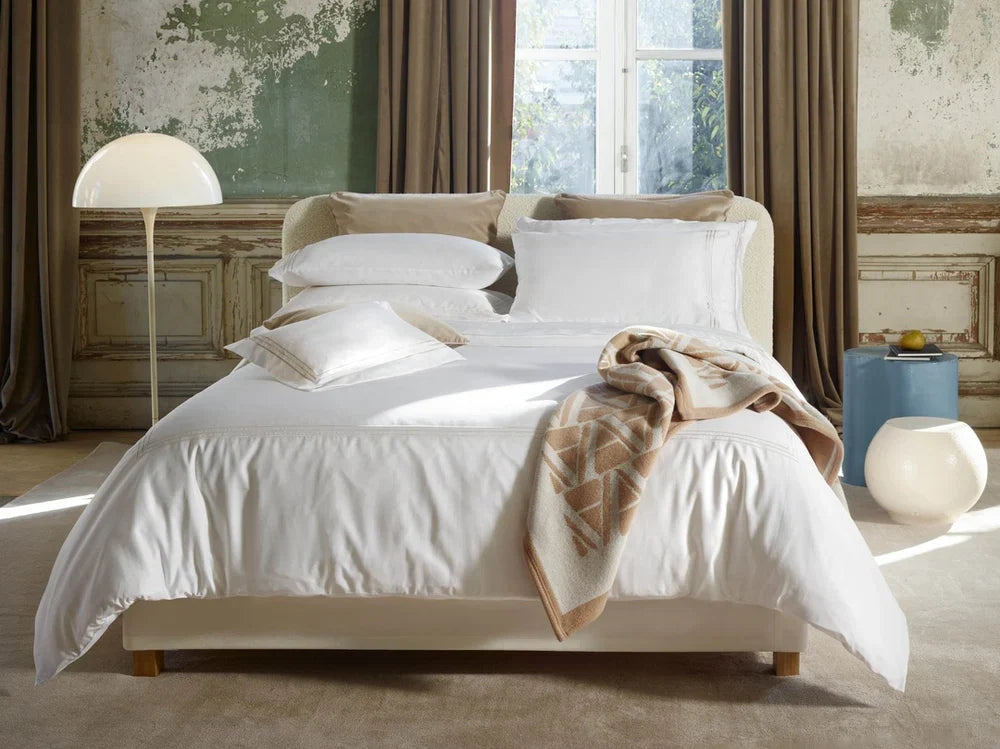
غالباً ما يكون القرار البصري بنفس أهمية القرار العملي. ملاءات الحرير تلتقط الضوء بشكل جميل. يمكن أن يجعل بريقها السرير يبدو أكثر رسمية ومسرحية، خاصة بألوان العاج، أو الشمبانيا، أو الرمادي اللؤلؤي، أو الكحلي الداكن، أو ألوان الأحجار الكريمة. وتتناسق بشكل طبيعي مع إطارات السرير المصممة خصيصاً، وألواح الرأس المنجدة، والوسائد الزخرفية التي تفضل اللمسات المصقولة.
الكتان يضفي عمقاً دون الحاجة إلى لفت الانتباه. يمنح تباينه الطبيعي السرير حضوراً أكثر أبعاداً ومعمارية، خاصة في الألوان المحايدة الناعمة مثل لون الكتان، والحجر، والأبيض، والضبابي، والفحمي. إنه مثالي للديكورات الداخلية التي تفضل الأخشاب الطبيعية، والإضاءة النحتية، والسجاد المنسوج، والمنسوجات ذات الطبقات. يمكن أن يبدو سرير الكتان مثالياً دون أن يظهر مرتباً بشكل مبالغ فيه.
هناك أيضاً اختلاف في الانسدال. ينسدل الحرير بشكل وثيق وانسيابي فوق المرتبة، مما يضفي خطاً دقيقاً وشبه سائل على السرير. الكتان يتمتع بهيكل أكبر وخشونة لطيفة، مما يخلق طيات ذات طابع خاص. لا يعتبر أيهما أكثر فخامة بطبيعته. الفخامة تكمن في جودة الألياف، وسلامة النسيج، والحرفية وراء القطعة النهائية.
متطلبات العناية ليست متساوية
الحرير يتطلب عناية دقيقة. يجب غسل العديد من ملاءات الحرير في دورة غسيل لطيفة بالماء البارد باستخدام منظف خفيف مخصص للألياف الرقيقة. فالمبيضات، ومنعم الأقمشة، والحرارة العالية، والحركة القوية يمكن أن تتلف الألياف أو تقلل من جودة ملمسها. يُعد التجفيف بالهواء عموماً هو الخيار الأكثر أماناً، يليه الكي بالبخار بحرارة منخفضة بعناية إذا لزم الأمر.
أما الكتان فهو أكثر مرونة بكثير. يمكن غسله عادة في الغسالة بالماء البارد أو الدافئ، ويصبح أكثر نعومة واسترخاء بمرور الوقت. يساعد تجنب المبيضات القوية في الحفاظ على لونه وقوته، لكن الكتان مصمم للاستخدام المنتظم. تجاعيده جزء من جاذبيته، لذا لا داعي لكيه ليصبح سطحاً أملس تماماً إلا إذا كان ذلك تفضيلك الشخصي.
بالنسبة للسرير الرئيسي الذي يتم استخدامه بشكل متكرر، يعتبر الكتان رفاهية أسهل في التعامل معها. بينما الحرير هو الأفضل لأولئك الذين يستمتعون بطقوس عناية أكثر دقة أو يرغبون في تخصيصه لغرفة الضيوف، أو المناسبات الخاصة، أو كطبقة فاخرة إضافية ضمن مجموعة مفروشاتهم.
المتانة والقيمة طويلة الأمد
الكتان هو أحد أقوى ألياف النسيج الطبيعية. مع الغسيل المناسب، يمكن لملاءات الكتان الفاخرة أن توفر سنوات من الخدمة وتكتسب ملمساً أكثر نعومة بمرور الوقت. إنها استثمار مقنع لسرير يُستخدم للنوم ليلياً، خاصة عندما تقدر المواد التي تكتسب طابعاً مميزاً بدلاً من أن تبلى ببساطة.
الحرير قوي بالنسبة لطبيعته الرقيقة، لكنه أكثر عرضة للتلف بفعل الاحتكاك، والحرارة، والغسيل غير السليم. يمكن لطقم ملاءات الحرير عالي الجودة أن يدوم طويلاً عند التعامل معه بعناية، ومع ذلك فهو يتطلب حماية أكبر من واقع الحياة اليومية: مخالب الحيوانات الأليفة، والجلد الخشن، والمجوهرات، والغسيل المتكرر بالماء الساخن. وتُفهم قيمته بشكل أفضل من خلال الإحساس والملمس بدلاً من الاستخدام العملي البحت.
لهذا السبب، غالباً ما يكون الاختيار عملياً بقدر ما هو جمالي. يوفر الكتان عادةً مرونة أكبر لمنزل العائلة أو جناح رئيسي عالي الاستخدام. بينما يوفر الحرير تجربة متميزة تكافئ العناية الدقيقة.
اختيار الملاءة المناسبة لأسلوب نومك
اختر ملاءات الحرير إذا كنت تنجذب إلى سطح أملس للغاية، وانسدال رشيق، ومظهر غرفة نوم مصقول. فهي تناسب النائمين الذين يفضلون الحد الأدنى من الملمس مقابل الجلد ويقدرون لمسة أولى باردة وأنيقة. الحرير أيضاً خيار جميل عندما يتم تصميم السرير كمركز للغرفة، مع غطاء سرير مفصل أو لحاف بلمسات نهائية دقيقة فوقه.
اختر ملاءات الكتان إذا كنت تقدر التهوية، واللمسة النهائية الأنيقة والعفوية، والأداء السهل في الحياة اليومية. الكتان مناسب بشكل خاص لمن يعانون من الحرارة أثناء النوم، والديكورات الداخلية الساحلية أو المعاصرة، وأي شخص يريد مفروشات تبدو أفضل عندما تكون مريحة بدلاً من أن تكون مكوية بشكل مفرط.
هناك خيار ثالث للأسر ذات الذوق الرفيع: اقتناء كليهما. يمكن أن يعمل الكتان كأساس موثوق لليالي الأكثر دفئاً والاستخدام اليومي، بينما يصبح الحرير رفاهية عرضية للأمسيات الأكثر برودة أو لتقديم غرفة الضيوف بشكل مميز. المفروشات، مثل خزانة الملابس، تستفيد من المواد المختارة للحظات مختلفة.
كيف تتسوق لملاءات الحرير أو الكتان الفاخرة
عند اختيار الحرير، انظر إلى ما هو أبعد من اللمعان. يجب أن يكون المصنع الموثوق واضحاً بشأن جودة الحرير، ووزن المومي، والنسيج، وتعليمات العناية. يجب أن يكون القماش ناعماً دون أن يبدو واهياً، ويجب أن يشتمل التصنيع على درزات مشطوبة بدقة ومطاط آمن على الملاءات المثبتة.
مع الكتان، قيّم النسيج وجودة التشطيب. يجب أن يبدو الكتان الفاخر قوياً وذا تهوية جيدة، مع نعومة توحي بأنه سيصبح أكثر جاذبية بعد الغسيل. ضع في اعتبارك عمق مرتبتك قبل اختيار الملاءة المثبتة، خاصة إذا كنت تستخدم غطاء مرتبة أو تصميماً مخملياً للمرتبة.
الألوان تستحق أيضاً قراراً مدروساً. يظل اللون الأبيض والعاجي خالداً، لكن نسيج الكتان جذاب بشكل خاص في الألوان المحايدة الترابية، بينما يمكن للحرير أن يبرز بشكل أقوى في الألوان الغنية العاكسة للضوء. إن اختيار المفروشات الأكثر نجاحاً يرتبط بالغرفة بأكملها: لوح الرأس، واللحاف، وستائر النوافذ، والأجواء التي ترغب في العودة إليها كل ليلة.
السرير الرائع لا يُحدد باختيار القماش "الأفضل" عالمياً. بل يُحدد باختيار المادة التي تجعل الراحة تبدو أكثر خصوصية، وأكثر راحة، وأكثر اهتماماً بجمال التفاصيل عندما ينتهي اليوم أخيراً.