دليل أقمشة مفروشات السرير الفاخرة لنوم راقٍ
يبدأ الشعور بجمال السرير المصنوع بعناية قبل أن تستلقي عليه. يبدأ بالنسيج الذي يلامس بشرتك: بارد ومنعش، ذو لمعان ناعم، خفيف ومتجدد الهواء، أو ناعم بشكل رائع. تم تصميم دليل الأقمشة الفاخرة لأسرة النوم هذا لجعل هذا الاختيار أكثر مدروسًا. فالألياف والنسيج والتشطيب والبناء كلها تؤثر على أداء فراش السرير ليلة بعد ليلة، بالإضافة إلى كيفية إكماله للغة البصرية لغرفة نوم راقية.
بالنسبة لغرفة النوم الفاخرة، يجب أن تكون الملاءات أكثر من مجرد مطابقة للغرفة. يجب أن تخلق إحساسًا مميزًا بالراحة، وتحافظ على طابعها من خلال الغسيل المتكرر، وتكمل الفراش والوسائد واللحاف الموجودة تحتها. النسيج المناسب شخصي، ولكن لا يجب أن يكون عرضيًا أبدًا.
دليل أقمشة أغطية السرير الفاخرة: ابدأ بالألياف
الألياف هي أساس أي ملاءة أو غطاء لحاف أو غطاء وسادة. فهي تحدد قابلية النسيج الطبيعية للتهوية، وملمسه، وتدليه، واحتياجات العناية به. لا يمكن للنسيج الناعم أن يعوض بشكل كامل عن المواد الخام الرديئة، ولهذا السبب تبدأ أغطية السرير الاستثنائية بألياف مختارة بعناية وحرفية منضبطة.
تظل الألياف الطبيعية هي المعيار للنوم الفاخر لأنها تدير الرطوبة جيدًا وتوفر جودة ملموسة نادرًا ما تحاكيها الأقمشة الاصطناعية الثقيلة. ومع ذلك، لا توجد ألياف واحدة هي الأفضل عالميًا. قد يفضل من ينامون في جو دافئ التهوية قبل كل شيء، بينما قد يفضل من يقدرون السرير المصقول المستوحى من الفنادق تشطيبًا أكثر نعومة وإشراقًا.
القطن طويل التيلة: الألياف الفاخرة الأساسية
القطن طويل التيلة هو نقطة البداية الأكثر تنوعًا لأغطية السرير الفاخرة. يمكن غزل أليافه الفردية الأطول إلى خيوط أدق وأقوى مع عدد أقل من الأطراف المكشوفة. والنتيجة هي نسيج يبدو أكثر نعومة من البداية ويصبح أكثر جاذبية بمرور الوقت، بدلاً من أن يصبح خشنًا أو رقيقًا بسرعة.
تجاوز الملصقات العامة وفكر في طريقة الصنع. أغطية السرير القطنية المصنوعة من ألياف طويلة التيلة، وخيوط ممشطة بعناية، ونسيج متوازن توفر الصفات التي يتوقعها المتسوقون المميزون: التهوية، والمتانة، والنعومة اللطيفة، واللمسة النهائية الأنيقة. كما أنها سهلة الاستخدام، مما يجعلها مناسبة بشكل خاص لغرفة النوم الرئيسية اليومية.
يمكن أن يكون القطن مقرمشًا أو حريريًا حسب طريقة النسيج. إنه الخيار الصحيح للأسر التي تبحث عن راحة قابلة للتكيف عبر الفصول، على الرغم من أن أولئك الذين ينامون في درجة حرارة عالية بشكل استثنائي قد يفضلون مرونة الكتان المريحة.
الكتان: ملمس سهل وراحة باردة
يتمتع الكتان بوجود مميز. ينسج من الكتان، وله ملمس طبيعي، وتهوية ممتازة، وتدلي مريح يجعل السرير يبدو مدروسًا دون أن يبدو رسميًا بشكل مفرط. تمتص أليافه الرطوبة بسهولة وتطلقها بكفاءة، مما يخلق شعورًا جافًا ومتجدد الهواء وهو جذاب بشكل خاص في المناخات الدافئة وغرف النوم المدفأة.
لا تهدف ملاءة الكتان الفاخرة إلى النعومة الزجاجية للساتان. يكمن جمالها في عدم الانتظام الدقيق، والملمس ذي الأبعاد، والنعومة التي تتطور مع كل غسلة. اختر الكتان عندما تتطلب غرفة النوم سهولة أوروبية بسيطة، ومواد طبيعية، وسريرًا يبدو جذابًا حتى عندما يكون منسقًا بشكل فضفاض.
هناك مقايضة. الكتان يتجعد بسهولة أكبر من القطن، وهذا جزء من شخصيته. بالنسبة لأولئك الذين يفضلون الزوايا المكوية بشكل حاد وسطحًا نقيًا ومصممًا، قد يكون بيركال القطن المنعش مناسبًا أكثر.
خلطات الحرير والكشمير: رفاهية بقصد
توفر أغطية السرير الحريرية نعومة استثنائية ولمعانًا رشيقًا. يقلل سطحها الناعم الاحتكاك بالجلد والشعر، بينما يمكن أن تكون خصائصها الطبيعية لتنظيم درجة الحرارة مريحة في الظروف الباردة والدافئة على حد سواء. غالبًا ما يكون غطاء الوسادة الحريري هو الطريقة الأكثر عملية لإدخال المادة، مما يوفر لمسة نهائية فاخرة دون الحاجة إلى سرير مغطى بالكامل بالحرير.
يتطلب الحرير عناية أكثر دقة من القطن أو الكتان. يُفضل الاحتفاظ به لأولئك الذين يقدرون فوائده الحسية ويشعرون بالراحة في اتباع تعليمات الغسيل المتخصصة. الجودة مهمة جدًا هنا، حيث يمكن أن يشعر الحرير المصنوع بشكل سيء بالهشاشة أو يفقد لمعانه بسرعة كبيرة.
يمكن أن توفر أغطية السرير المخلوطة بالكشمير أو الصوف مستوى آخر من الدفء والنعومة خلال الأشهر الباردة، خاصة في البطانيات والرميات. هذه المواد ليست بديلاً للملاءات القابلة للتنفس، ولكنها طبقة راقية لغرفة نوم مصممة حول الراحة الموسمية. غالبًا ما تتكون أرقى الأسرة من طبقات بدلاً من أن تكون مبنية على نسيج واحد فقط.
النسيج يغير التجربة
بمجرد اختيار الألياف، يحدد النسيج الكثير من شخصية القماش. يمكن أن تشعر ملاءتان قطنيتان مختلفتين تمامًا لأن إحداهما منسوجة لإنهاء منعش وبارد والأخرى للمسة سلسة وفخمة.
البركال لسرير أنيق ومصمم
يستخدم البركال نسجًا بسيطًا بفتلة فوق وفتلة تحت. يخلق لمسة نهائية غير لامعة، وملمسًا باردًا، وهيكلًا نظيفًا يذكرنا بغرفة ضيوف فاخرة مُجهزة بشكل جميل. يعتبر البركال جذابًا بشكل خاص للأشخاص الذين ينامون في جو حار وأي شخص يستمتع بالإحساس المنعش والناعم قليلاً للملاءة ذات المظهر المصمم.
سيكون البركال المصنوع جيدًا أخف من الساتان وقد يلين تدريجيًا بمرور الوقت. لا يُقصد به أن يكون زلقًا أو لامعًا. اختره للراحة القابلة للتنفس، لتصميم السرير المعماري، وغرفة نوم ذات جمالية منعشة ومنظمة.
الساتان للنعومة واللمعان اللطيف
ينسج الساتان ليضع المزيد من الخيوط على سطح القماش، مما يخلق ملمسًا أكثر نعومة ولمعانًا خفيفًا. ينسدل بشكل جميل فوق الفراش ويميل إلى أن يكون أكثر دفئًا وأكثر احتواءً من البركال. يناسب تشطيبه غرف النوم حيث تكون الثراء والنعومة والتأثير البصري الأكثر صقلًا من الأولويات.
بالنسبة لمن ينامون في جو أكثر برودة، يمكن أن يكون الساتان خيارًا ممتازًا على مدار العام. بالنسبة لمن ينامون في جو دافئ، يعتمد الأمر على جودة القطن ودرجة حرارة الغرفة. يمكن أن يتنفس ساتان القطن طويل التيلة المنسوج بدقة جيدًا، لكنه لن يتمتع بتهوية البركال أو الكتان المنعشة.
تفاصيل الجاكار والتطريز
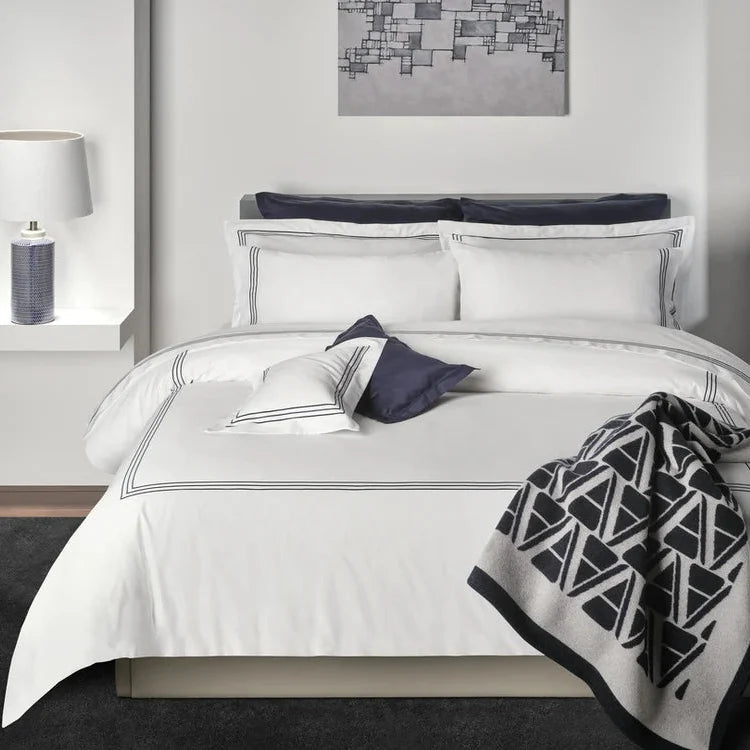
تدمج أقمشة الجاكار أنماطًا منسوجة مباشرة في القماش، مما يوفر عمقًا وتطورًا زخرفيًا دون الاعتماد على الزخارف المطبوعة. يوفر التطريز والتطريز المخرم والحواف المصممة إحساسًا مشابهًا بالتميز. هذه التفاصيل مثالية لجناح رئيسي رسمي أو غرفة ضيوف حيث يُقصد بالسرير أن يترك انطباعًا فوريًا.
توازن أغطية السرير المزخرفة الأكثر نجاحًا بين التفاصيل البصرية وسطح النوم المريح. فكر في وضع القطع المزخرفة بكثرة في أغطية اللحاف، أو أغطية الوسائد، أو الملاءات العلوية، مع الحفاظ على الملاءة السفلية وأغطية الوسائد النوم بسيطة بشكل جميل.
عدد الخيوط هو مجرد مقياس واحد
لطالما اعتبر عدد الخيوط اختصارًا للجودة، ولكن الأرقام العالية بشكل استثنائي يمكن أن تكون مضللة. يحقق بعض المصنعين أعدادًا مبالغًا فيها بلف خيوط متعددة معًا وحساب كل مكون على حدة. وهذا لا يخلق بالضرورة ملاءة أدق أو أكثر متانة.
بالنسبة لأغطية السرير القطنية الفاخرة، فإن جودة الألياف والخيوط والنسيج وعملية التشطيب أهم من رقم باهظ على العبوة. يمكن أن تبدو الملاءة المصنوعة بعناية في نطاق متوسط أكثر فخامة بكثير من القماش الكثيف والثقيل المصنوع من ألياف أقصر. الهدف هو ملاءة تتنفس، وتتحرك بشكل طبيعي، وتحافظ على سلامتها بعد الغسيل.
يستحق الوزن أيضًا الاهتمام. غالبًا ما تكون الأقمشة خفيفة الوزن الأفضل للغرف الدافئة وأشهر الصيف، بينما يمكن لطبقة ساتان أو فلانيل أكثر كثافة قليلاً أن توفر راحة مرحب بها في الشتاء. توفر خزانة بياضات مصممة جيدًا خيارات بدلاً من إجبار مجموعة واحدة من الملاءات على الأداء في كل موسم.
كيف تختار أغطية السرير لأسلوب نومك
ابدأ بكيفية نومك، ثم فكر في كيفية رغبتك في أن تكون الغرفة. إذا كنت تميل إلى النوم في جو دافئ، فاجعل الأولوية للبركال، أو الكتان، أو قطن طويل التيلة خفيف الوزن. إذا كنت ترغب في شعور أكثر نعومة وراحة، فاختر ساتان القطن. إذا كان الملمس البصري والأناقة المريحة يهمانك أكثر، فمن الصعب تجاوز الكتان. ولإضافة لمسة راقية ذات فائدة حسية، أضف أغطية وسائد حريرية.
اللون والتشطيب مهمان بنفس قدر أهمية القماش في غرفة نوم مصممة. يبدو بركال القطن الأبيض منعشًا ومصممًا. يضفي ساتان العاج دفئًا ولمعانًا لطيفًا. تضفي ألوان الكتان الطبيعية نعومة على الأسرة الخشبية والحجرية والمبطنة، بينما يمكن للحواف المطرزة أن تعكس تفاصيل الستائر أو السجاد أو الوسائد المزخرفة.
من الحكمة أيضًا الاستثمار في أكثر من طقم واحد. يتيح تدوير أغطية السرير الفاخرة للألياف أن تستريح بين الاستخدامات، ويطيل عمر كل طقم، ويمنحك حرية تعديل الراحة مع الفصول. تقوم سليبنج بلازا بتنسيق أغطية السرير مع الأخذ في الاعتبار هذا المنظور الشامل للغرفة: يجب أن يبدو السرير مكتملًا بقدر ما هو جميل.
العناية التي تحافظ على اللمسة النهائية
أغطية السرير الفاخرة تكافئ العناية الصحيحة. اغسل الملاءات بشكل منفصل عن الملابس الثقيلة، استخدم منظفًا لطيفًا، وتجنب ملء الغسالة بشكل زائد. يمكن أن تضعف الحرارة الزائدة الألياف الطبيعية وتبهت اللمسات النهائية، لذا اختر إعدادات تجفيف منخفضة عندما يكون ذلك ممكنًا وأخرج أغطية السرير بسرعة لتقليل التجاعيد العميقة.
يستفيد الكتان من الاستخدام والغسيل المنتظم، بينما يحتفظ القطن بجماله عند التعامل معه بلطف. بالنسبة للحرير، اتبع تعليمات العناية بدقة. العناية الصحيحة ليست مجرد صيانة. إنها تحمي النعومة والتدلي والمظهر الراقي الذي جعل القماش يستحق الاختيار في المقام الأول.
أفضل نسيج لأغطية السرير هو الذي تتطلع إلى العودة إليه في نهاية اليوم. دع تفضيلات نومك تقودك، ثم اختر النسيج واللمسة النهائية التي تجعل غرفة نومك تبدو لك وحدك بلا شك.